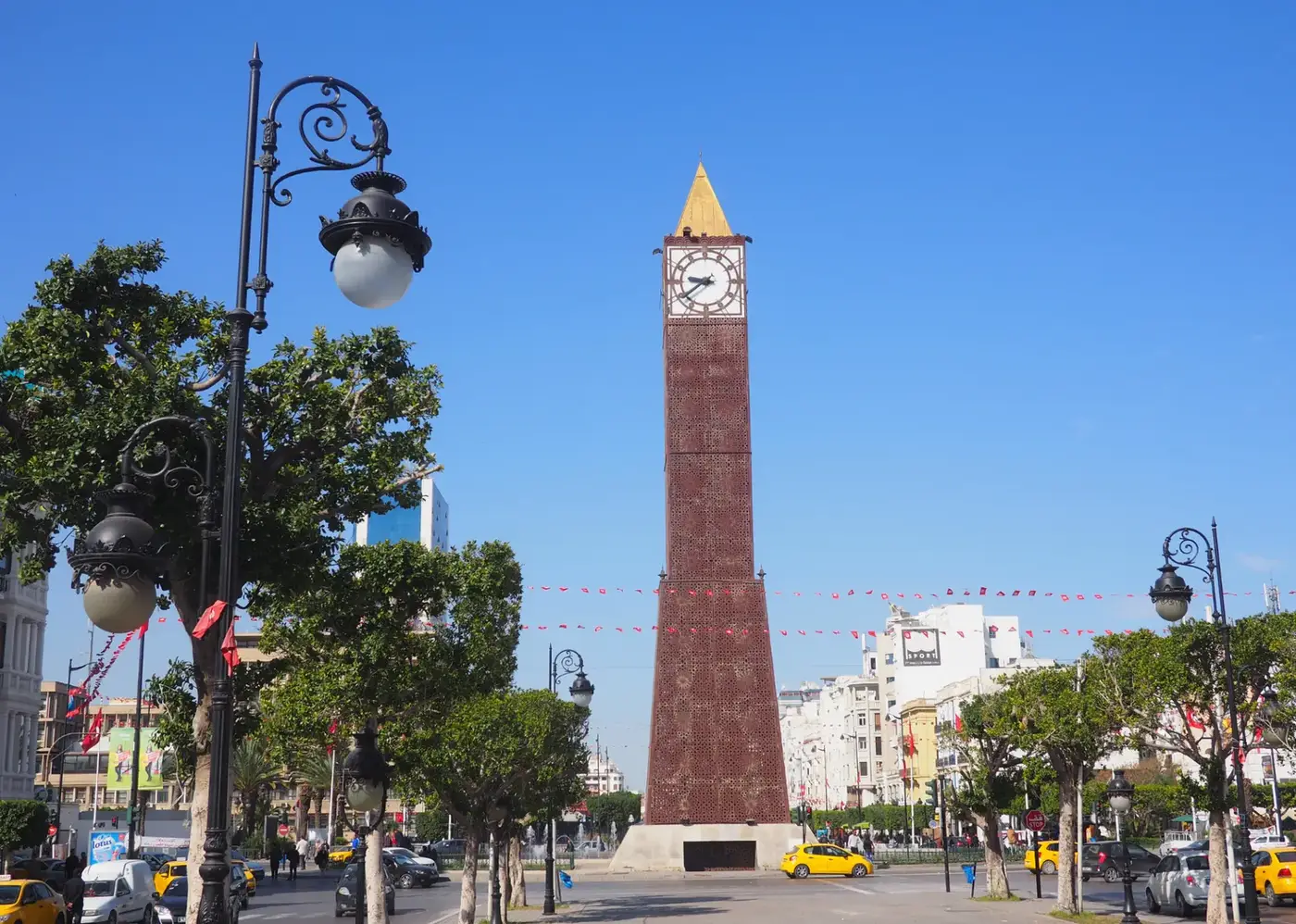
Why visit Tunisia
Tunisia gives you four very different countries in one. The north is green Mediterranean — cork forests around Tabarka, beaches and lagoons around Bizerte, and the lively capital. The Sahel coast (Hammamet, Sousse, Mahdia, Monastir) is the beach-resort heartland, with the longest stretch of fine-sand bays in North Africa. The interior holds the Roman cities of Dougga, El Jem and Sbeitla, the holy city of Kairouan, and the Berber villages of the Dahar plateau. And the south is pure desert: oases, salt lakes, and the dunes of the Grand Erg Oriental.
Compared with neighbouring Morocco, Tunisia is smaller, flatter, cheaper, and far less touristed. You can drive from Tunis to the Sahara in a single day. Most travellers split a week between one cultural base (Tunis or Hammamet) and one beach or desert leg.
When to go
The shoulder months — April, May, June, September, October and early November — are the sweet spot. Daytime temperatures sit between 22°C and 30°C across the coast, the sea is swimmable from late May to mid-October, and prices are 30–40% lower than peak August.
July and August are very hot inland (40°C+ in the south) but still pleasant on the coast thanks to the Mediterranean breeze. This is when European families fly in, and beach resorts run at capacity. Winter (December–February) is mild on the coast (15–18°C by day) and is the only sensible window to walk the desert ksars and Roman sites without burning.
Getting there and getting around
Three international airports serve the country. Tunis–Carthage (TUN) is the main hub and the right choice for Tunis, Sidi Bou Said, Carthage, and the north. Enfidha–Hammamet (NBE) is the charter and low-cost airport for the Hammamet–Sousse beach belt. Djerba–Zarzis (DJE) is the gateway to Djerba island and the Sahara.
Tunisair, Nouvelair, Transavia, Ryanair, EasyJet, Vueling, ITA, Lufthansa, Air France, Turkish, Tunisair Express, Gulf Air and Saudia all serve Tunisia. From the UK, Tunisair flies London Gatwick to Tunis; charter operators fly Manchester and Birmingham to Enfidha.
Inside the country, hire a car (€25–35 per day) or use shared louage minivans between cities. Ride-hailing works in Tunis and Sousse; taxis are cheap and metered. The SNCFT train links Tunis–Sousse–Sfax–Mahdia along the coast.
What to see — the eight headline regions
Most first-time trips focus on three or four of these:
- Tunis & Carthage — capital, UNESCO medina, Bardo mosaics, Roman ruins, Sidi Bou Said.
- Hammamet & Cap Bon — beach resorts, thalasso spas, Medina of Yasmine, day trip to Nabeul.
- Sousse, Monastir & Mahdia — central coast, family resorts, Roman El Jem amphitheatre.
- Kairouan — fourth holiest city of Islam, Great Mosque, carpet souks.
- Djerba & Zarzis — island life, white-sand beaches, the 2,500-year-old El Ghriba synagogue.
- Sahara & oases — Tozeur, Douz, Chebika, Ksar Ghilane, Star Wars sets at Matmata and Ong Jemel.
- Tabarka, Bizerte & Ichkeul — northern coast, diving, cork forests, UNESCO lake park.
- Dahar plateau — Tataouine, Chenini, Douiret — Berber granaries and troglodyte villages.
What it costs
Tunisia is one of the cheapest Mediterranean destinations open to Western travellers in 2026. Backpackers can travel comfortably on €40 per day; mid-range couples on €70–120 per person; luxury travellers on €200–350 per person including a five-star sea-view suite, a private driver and dinner at restaurants like Dar El Jeld.
Resorts and spa hotels charge a fraction of Spanish or Greek equivalents. Public transport is heavily subsidised — a one-hour train ride costs €2–4, and a city taxi rarely exceeds €3. Food, even at smart restaurants, is the biggest pleasant surprise.
Safety, money and practicalities
Tunisia is rated low-risk for tourism by the UK Foreign Office, the French Ministry, the US State Department and Global Affairs Canada (for the main tourist regions). Petty theft exists in souks; violent crime against tourists is rare. The standard precautions for any Mediterranean city apply.
The dinar is a closed currency — you change cash on arrival and convert any leftover back at the airport before flying out. ATMs are everywhere; cards work in hotels and restaurants but not in souks or louages. A Tunisie Télécom or Ooredoo SIM with 10 GB of data costs about €5.
Tunisia's pitch is simple: more sites, more variety, and more space per euro than almost anywhere else on the Mediterranean — without losing the proximity to Europe. Start with the city pages and itinerary linked below, lock in your dates around the shoulder months, and use the rest of eTunisie for the deep practical detail.