etunisie
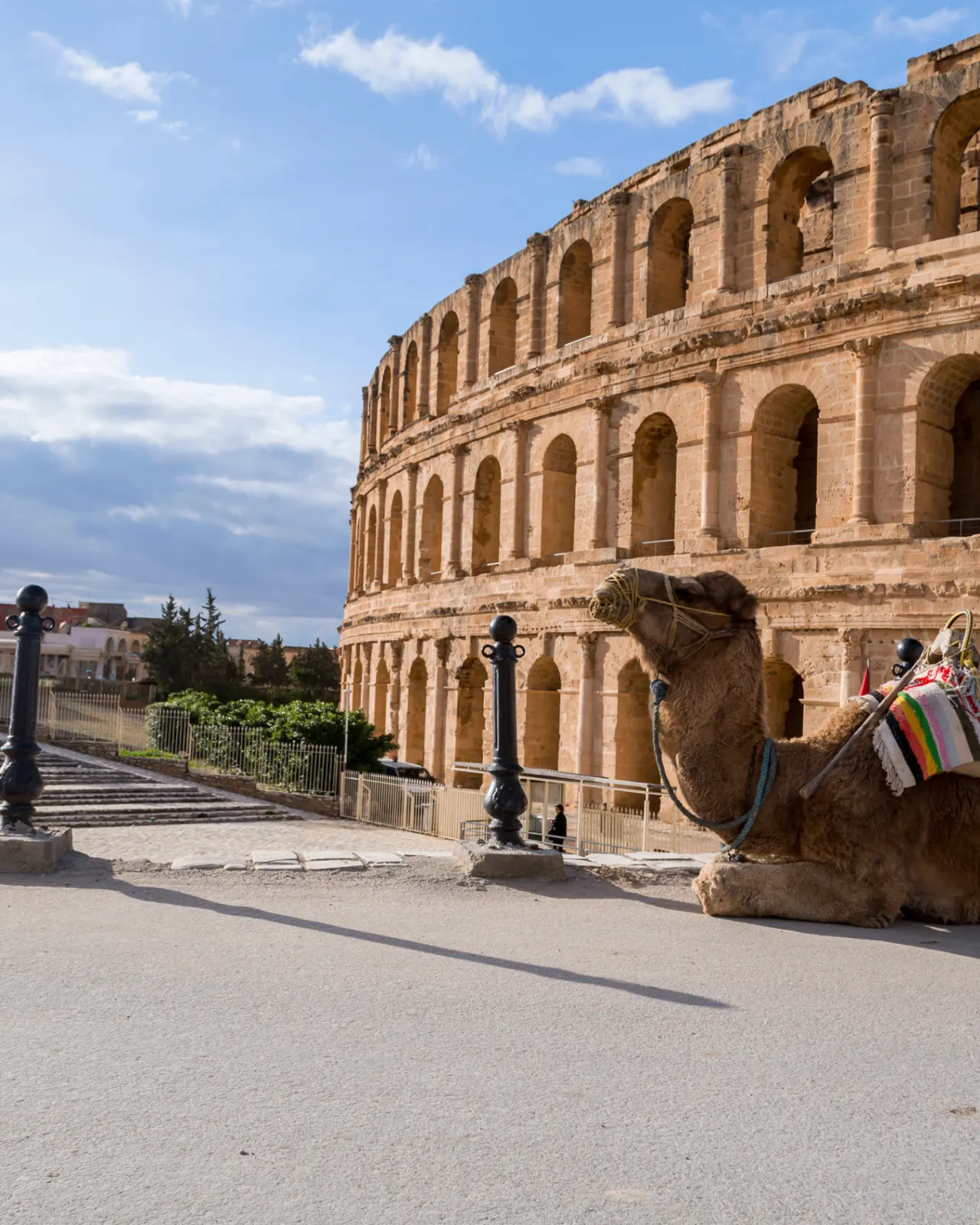
Roman amphitheatre of El Jem
Cultural heritage

Tunisia's cultural heritage

Eight UNESCO World Heritage sites packed into a country smaller than England — from the Punic ruins of Carthage to the Roman amphitheatre of El Jem and the holy city of Kairouan. Here's the full list, in one place, with opening hours and ticket prices.

Quick answerUpdated

Tunisia has 8 UNESCO World Heritage sites: Carthage, the Medina of Tunis, Kairouan, the Medina of Sousse, the Amphitheatre of El Jem, Dougga, Ichkeul National Park, and the Punic Town of Kerkouane. Most are open daily; standard tickets are TND 5–12.

  • 7 cultural sites + 1 natural site (Ichkeul wetlands)
  • Carthage and Tunis medina were inscribed first, in 1979
  • El Jem is the largest Roman amphitheatre in Africa
  • Kerkouane is the only Phoenician-Punic city not overbuilt
  • Most sites: 08:00–18:00 in summer, shorter in winter
  • Tickets typically TND 5–12; combined tickets available in Carthage
UNESCO sites
8
Earliest
1979
Most recent
1997
Natural sites
1
8
UNESCO sites
3,000+
Years of history
9
Civilisations
30+
National museums

The 8 UNESCO World Heritage sites

Listed in chronological order of UNESCO inscription. Opening hours and ticket prices are reviewed annually but always verify on the day — some sites close earlier in winter or for restoration.
UNESCO 1979·Cultural

Archaeological Site of Carthage

Tunis · Punic & Roman, 9th c. BC – 7th c. AD

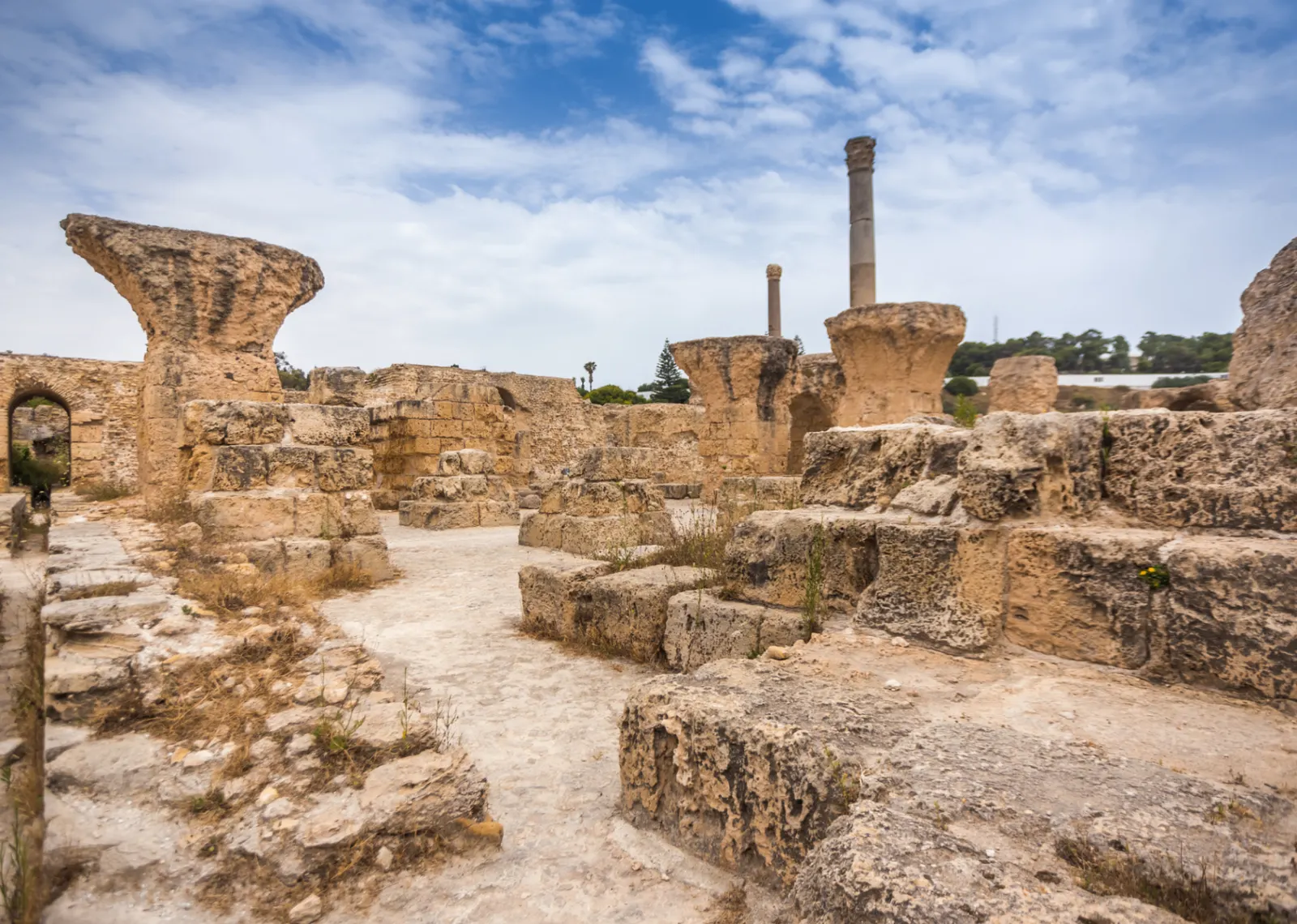
The legendary rival of Rome, founded by the Phoenicians in 814 BC. Today an open-air park spread across the Tunis suburb of Carthage, with Roman baths, the Tophet, the Punic ports, and Byrsa Hill museum.

Hours
08:30–17:30 (winter), 08:00–18:30 (summer)
Ticket
TND 12 (combined ticket for all Carthage monuments)
Explore Tunis
UNESCO 1979·Cultural

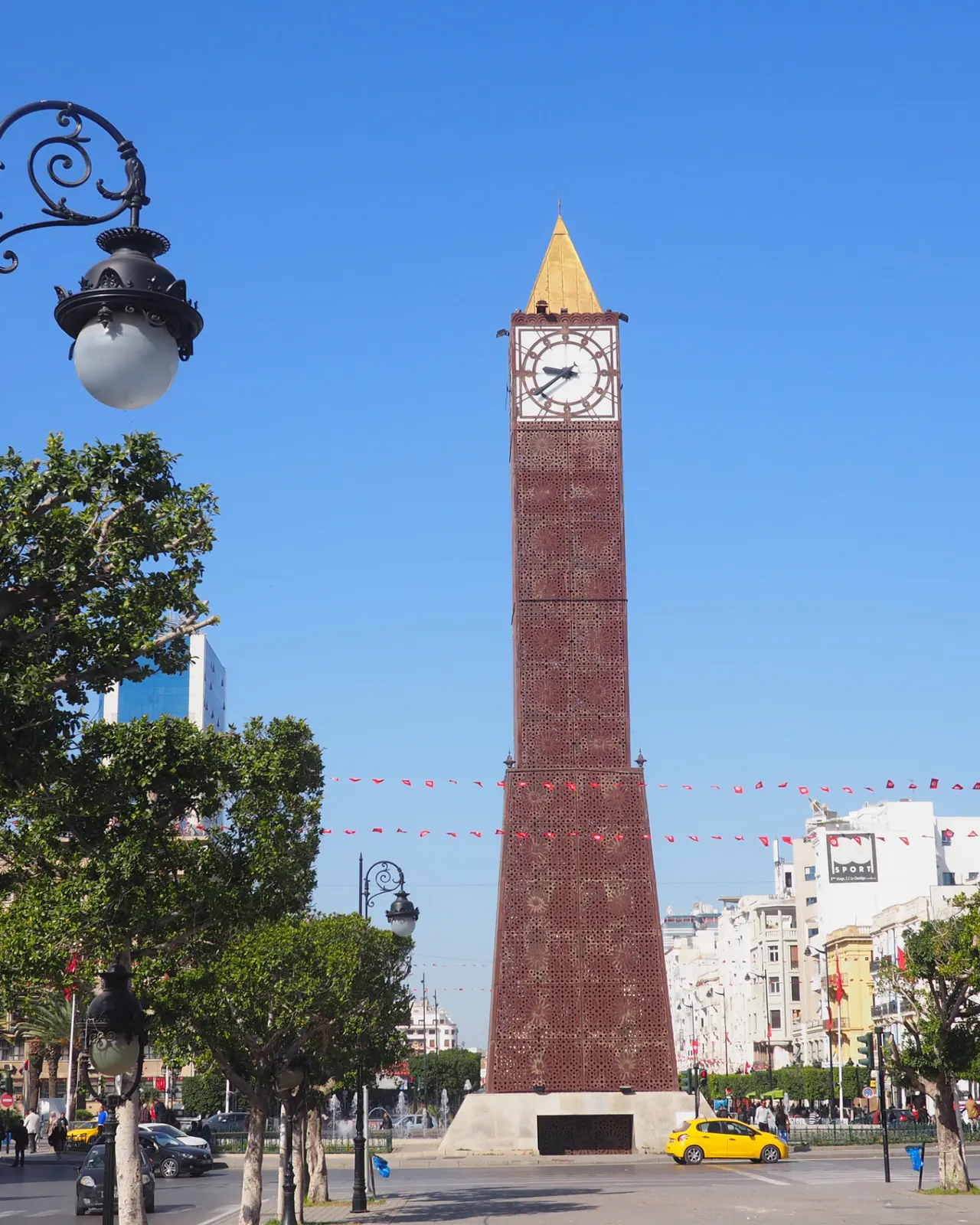
Medina of Tunis

Tunis · Founded 698 AD

One of the best-preserved medinas in the Islamic world: 700+ monuments inside 270 hectares of walled city. Highlights include the Zitouna Mosque, the Bardo's predecessor palaces, and the souks of perfume, fabric and gold.

Hours
Free public access; mosques 09:00–11:00 for non-Muslims
Ticket
Free (Zitouna courtyard TND 5)
Explore Tunis
UNESCO 1988·Cultural

Kairouan

Kairouan · Founded 670 AD

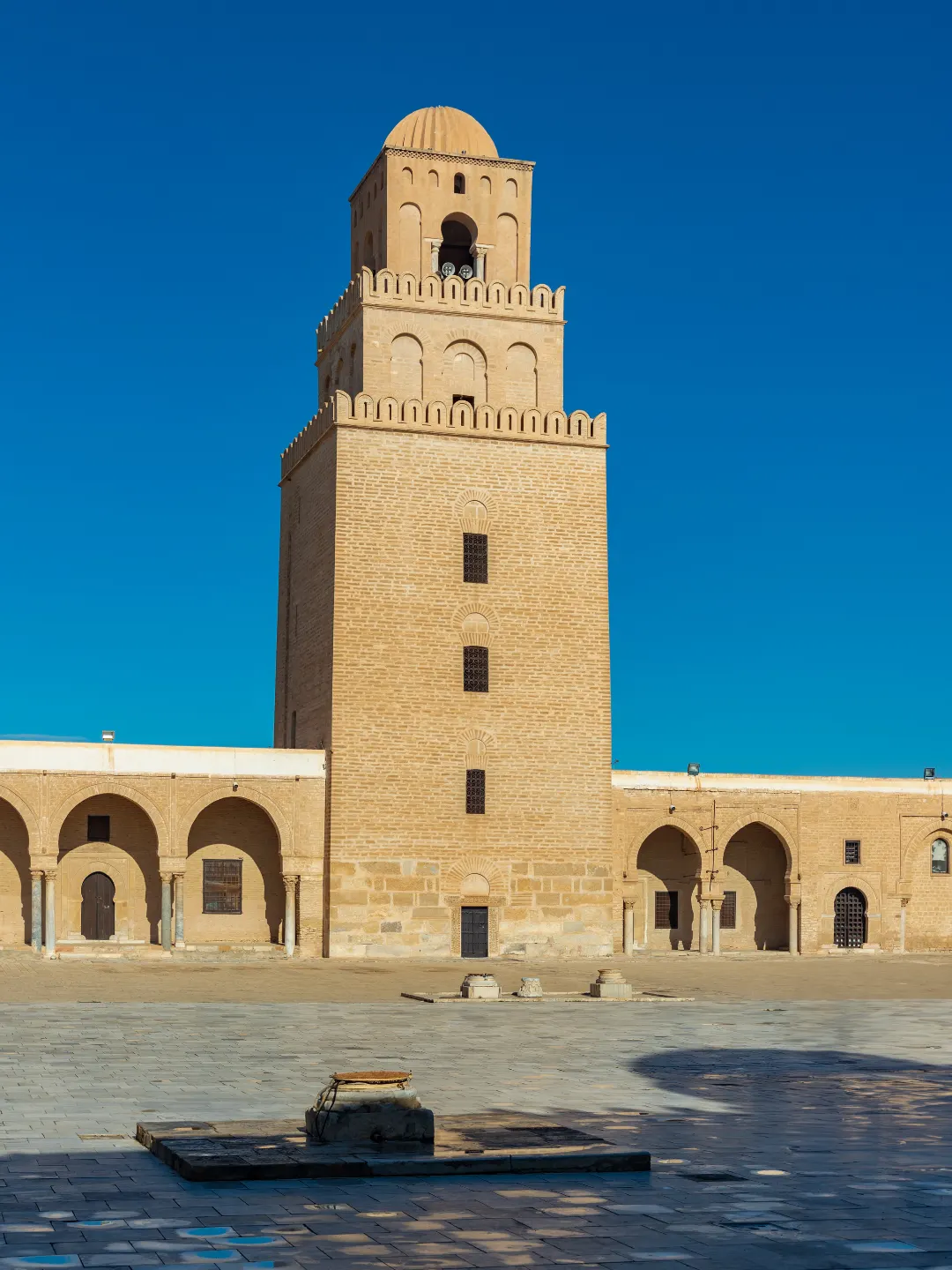
Islam's fourth holy city, after Mecca, Medina and Jerusalem. Home to the Great Mosque of Uqba (the oldest in North Africa), the Mosque of the Three Doors and the Aghlabid pools.

Hours
08:00–17:00
Ticket
TND 12 combined ticket
Explore Kairouan
UNESCO 1988·Cultural

Medina of Sousse

Sousse · Aghlabid, 9th c. AD

A typical example of a town from the first centuries of Islam, with intact ramparts, the Ribat fortress-monastery, the Great Mosque and one of the world's finest Roman mosaic museums.

Hours
08:30–17:30
Ticket
TND 8 (Ribat); TND 8 (Sousse Museum)
Explore Sousse
UNESCO 1979·Cultural

Amphitheatre of El Jem

Mahdia · Roman, 3rd c. AD

The largest Roman amphitheatre in Africa and the third largest in the world, with capacity for 35,000 spectators. Hosts the El Jem International Symphonic Festival every summer.

Hours
08:00–19:00 (summer), 08:30–17:30 (winter)
Ticket
TND 12 (combined with El Jem Museum)
Explore Mahdia
UNESCO 1997·Cultural

Dougga / Thugga

Béja · Numidian & Roman, 6th c. BC – 6th c. AD

The best-preserved Roman small town in North Africa, set on a 65-hectare hilltop with intact theatre, capitol, forum, baths and a unique Libyan-Punic mausoleum.

Hours
08:00–18:00 (summer), 09:00–17:00 (winter)
Ticket
TND 8
Explore Béja
UNESCO 1980·Natural

Ichkeul National Park

Bizerte · Wetland ecosystem

The last remaining link in a chain of lakes that once stretched across North Africa. Hosts hundreds of thousands of migratory birds (storks, flamingos, geese) every winter.

Hours
Daylight hours; ecomuseum 08:00–17:00
Ticket
TND 5
Explore Bizerte
UNESCO 1985·Cultural

Punic Town of Kerkouane

Nabeul · Punic, 6th–3rd c. BC

The only Phoenician-Punic city to have survived without later Roman or Arab overbuilding. Streets, houses and a famous pink-bath floor plan offer the cleanest window onto Carthaginian daily life.

Hours
09:00–17:00
Ticket
TND 8 (combined with museum)
Explore Nabeul
Carthage Roman ruins

Major national museums

Beyond the UNESCO list, Tunisia's museum network — managed by the Institut National du Patrimoine (INP) — holds one of the Mediterranean's richest collections, especially of Roman mosaics. Six museums are essential.
  • Bardo National Museum

    Tunis

    The world's largest collection of Roman mosaics, housed in a 19th-century Beylical palace. Reopened in 2023 after major renovations.

    Official site ↗
  • Carthage National Museum

    Carthage

    Punic and Roman artefacts from the surrounding archaeological park, atop Byrsa Hill.

  • Sousse Archaeological Museum

    Sousse

    World-class Roman mosaics inside the medina's kasbah.

  • El Jem Museum

    El Jem

    Mosaics and sculptures from the Roman city of Thysdrus, beside the amphitheatre.

  • Dar Hussein / National Heritage Museum

    Tunis (medina)

    Islamic decorative arts inside a restored Beylical residence.

  • Nabeul Archaeological Museum

    Nabeul

    Finds from Neapolis (ancient Nabeul) and Cap Bon, including the Mercury head.

Classified medinas

In addition to the two UNESCO medinas (Tunis and Sousse), Tunisia has 11 other historically classified medinas worth visiting: Kairouan, Sfax, Mahdia, Monastir, Bizerte, Le Kef, Testour, Tozeur, Nefta, Houmt Souk (Djerba), and Hammamet's old town. Most are free to walk through and best explored on foot in early morning.
Bab el Bhar gateway, Tunis medina
Great Mosque of Kairouan

Beyond the UNESCO list

The INP has classified more than 600 archaeological sites and historic buildings across the country. Standout non-UNESCO sites include: Bulla Regia (Roman underground villas), Sbeitla (a remarkable Byzantine forum), Chemtou (the Numidian marble quarry), Utica (the original Phoenician port), Oudhna (a complete Roman colony), and the Berber ksour of the south (Tataouine, Chenini, Douiret).
FAQ

Frequently asked questions

How many UNESCO World Heritage sites does Tunisia have?
Tunisia has 8 UNESCO World Heritage sites — 7 cultural and 1 natural (Ichkeul National Park). That's the highest count per capita of any North African country.
What is Tunisia's most famous heritage site?
Carthage, founded in 814 BC, is the most internationally famous, but the Roman amphitheatre of El Jem is often the most visually striking — it's the largest Roman amphitheatre in Africa and the third largest in the world.
Is the Bardo Museum open?
Yes. The Bardo National Museum reopened in 2023 after major renovations and is fully accessible. It holds the world's largest collection of Roman mosaics, set inside a 19th-century Beylical palace in Tunis.
Can I visit all 8 UNESCO sites in one trip?
Yes — they are spread over 5 governorates. A 7–10 day itinerary covering Tunis (Carthage + medina), Kairouan, Sousse, El Jem, Dougga (day trip from Tunis), Bizerte (Ichkeul) and Kerkouane (Cap Bon) is comfortable, especially with a private driver.
Are heritage sites accessible to visitors with reduced mobility?
Some — Carthage Roman baths, El Jem, the Bardo Museum and most Sousse Ribat have been adapted. Older medinas and Dougga are largely cobblestone and uneven. We mark accessibility on each site page where confirmed.

Ready to plan your Tunisia trip?

Build a custom 3, 7 or 14-day itinerary in 60 seconds with our free Itinerary Builder.