etunisie
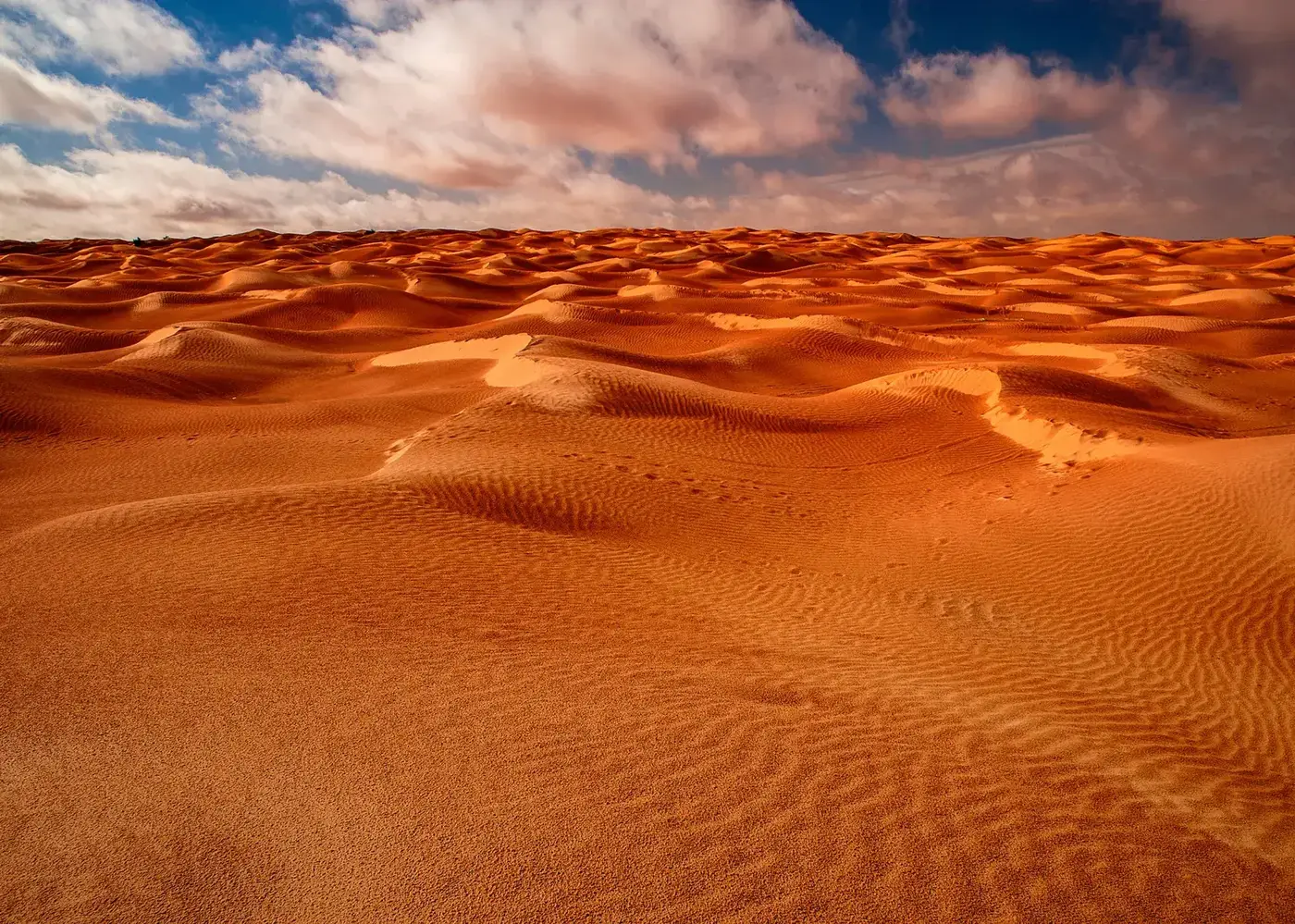
Golden Sahara dunes at sunset in southern Tunisia
About Tunisia

Why Tunisia: the Mediterranean's most surprising country

In a single short trip you can swim in the Med, sleep under Saharan stars, walk through 2,000-year-old Roman ruins and have dinner on a whitewashed clifftop above the sea. No other country in the region packs this much into so little distance — or at this price.

Tunisia facts & numbers

A small country with an outsized story.

Area, population, languages, currency, coastline, UNESCO sites — every headline number you need before you plan a trip, all in one place below.

See the full country guide
km² area
163,610
population
12.3M
coastline
1,300 km
UNESCO sites
8
1,300 km
Mediterranean coast
8
UNESCO sites
2h 30
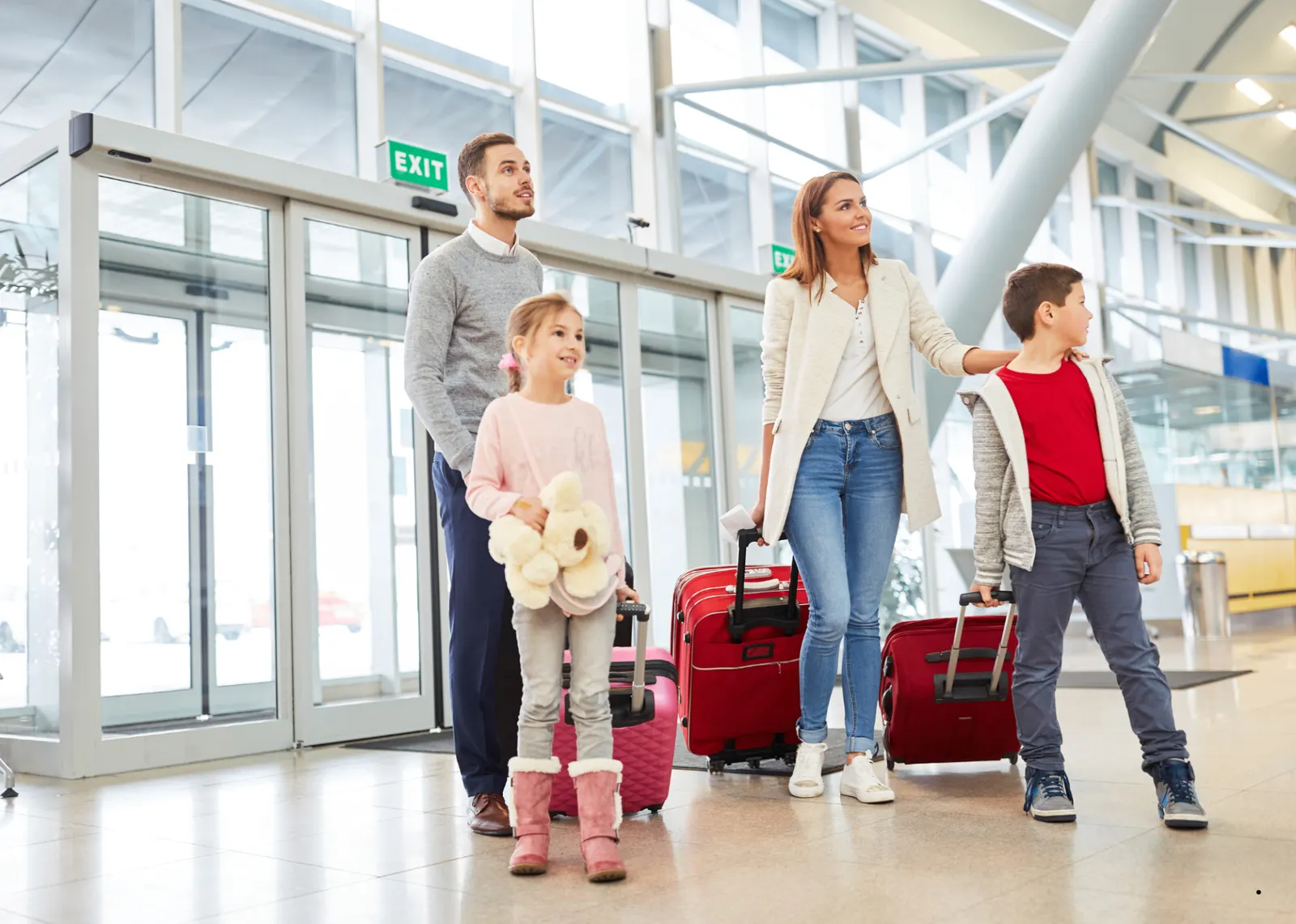
Avg. flight from Europe
300+
Sunny days a year

Two seas, one country

Tunisia is the northernmost country in Africa, with the Mediterranean wrapping around its entire north and east coasts. To the south, the landscape shifts from olive groves and salt lakes to the orange dunes of the Grand Erg Oriental — the real, cinematic Sahara. What makes Tunisia unusual is the scale. From Tunis you can be on a beach in an hour, in a Berber mountain village in four, and at a desert camp by sunset the same day. Most travellers never stay in one place for long — and they don't have to.
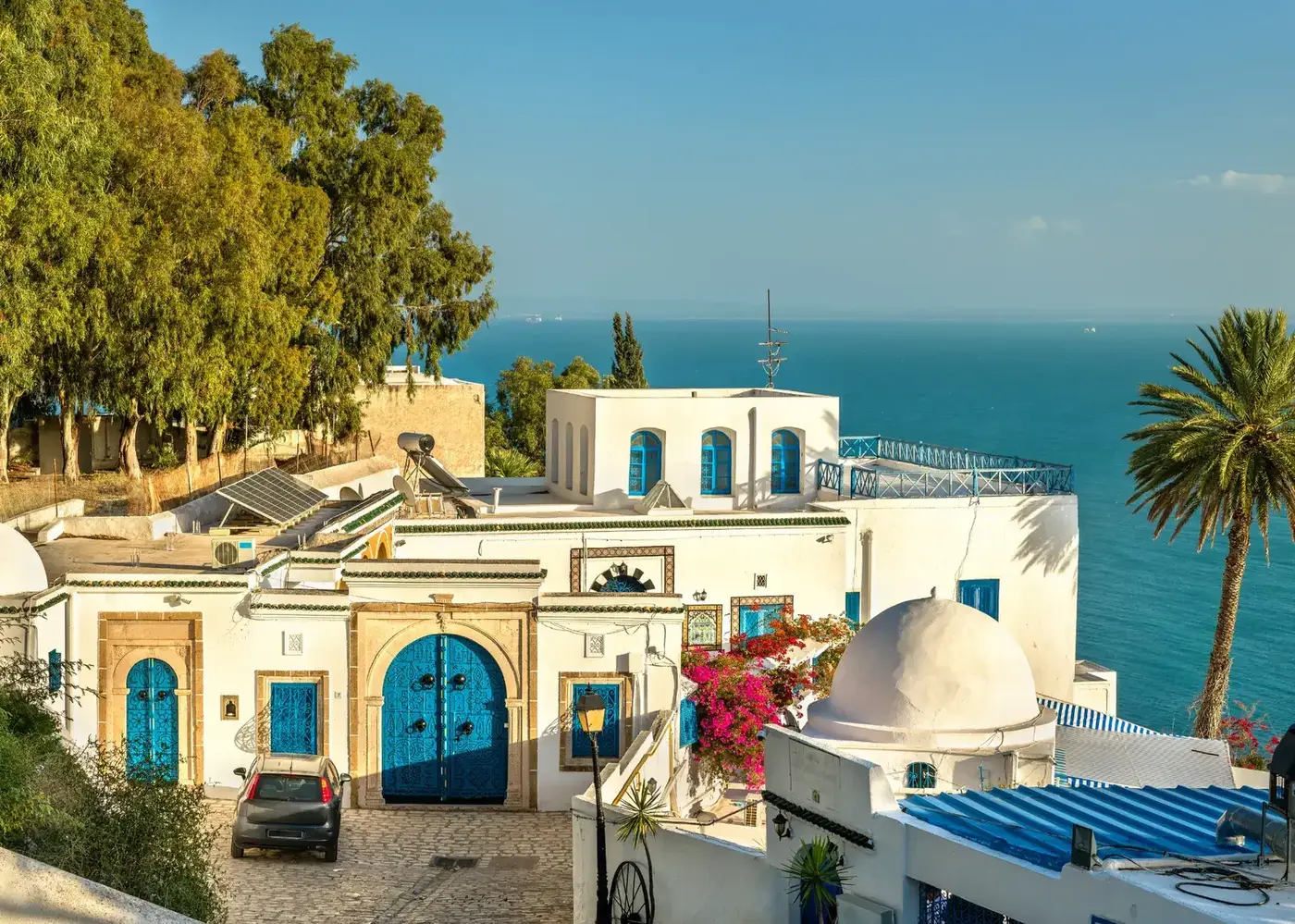
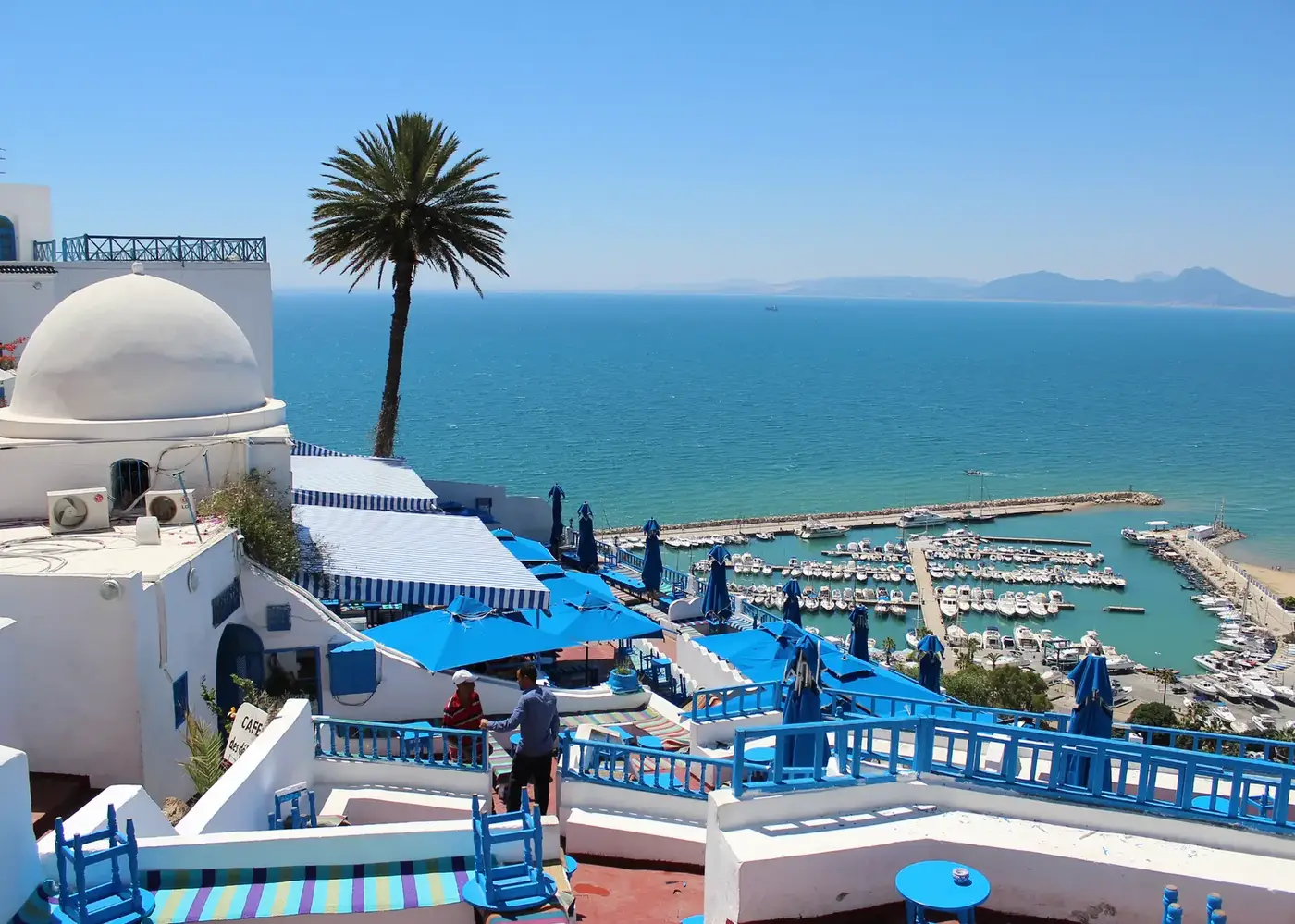
Whitewashed houses with blue doors in Sidi Bou Said
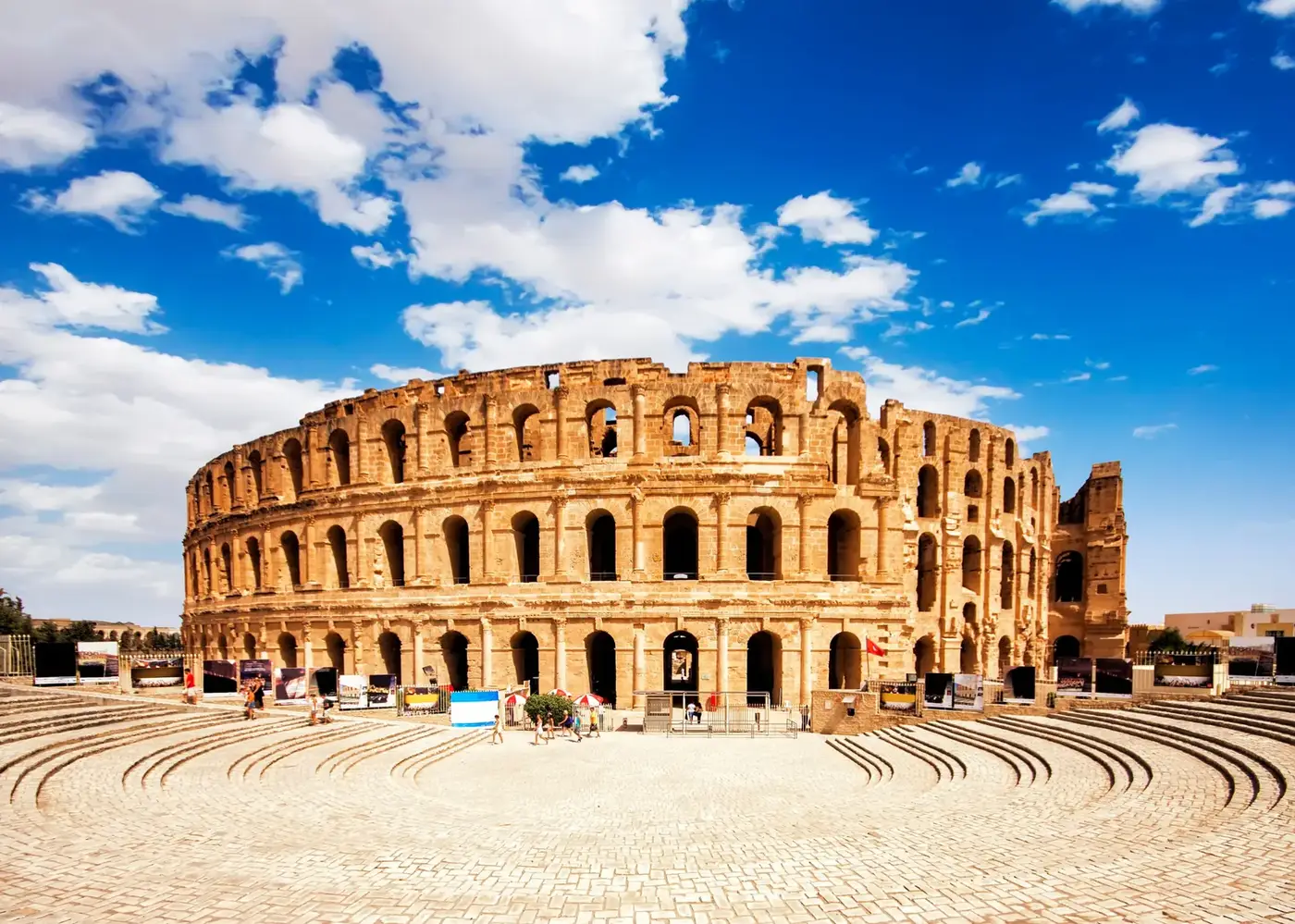
The Roman amphitheatre of El Jem

3,000 years of layered history

Phoenicians founded Carthage here in 814 BC. The Romans came next and left some of the best-preserved ruins in the world — the colossal amphitheatre at El Jem, the forum at Dougga, the Christian basilicas of Sbeitla. Then came the Arab conquerors who founded Kairouan, the fourth holiest city in Islam, and the Ottomans, the French, and finally independence in 1956. You feel all of it. A morning at a Roman site, a lunch of couscous in a converted Ottoman palace, an afternoon in a French Art Deco café in downtown Tunis. Tunisia wears its history lightly, but it is everywhere.

Resorts, riads and desert camps

Accommodation in Tunisia spans almost every category a traveller could want. The northern coast around Gammarth and the long crescent of Hammamet Bay are lined with full-service 4 and 5-star beach resorts, many of them all-inclusive and excellent value compared to neighbouring Mediterranean countries. For character, the medinas of Tunis, Sousse and Kairouan hide restored riads and dar — old courtyard houses turned into boutique hotels with plunge pools, libraries and rooftops. And in the south, you can swap all of that for a Berber-style camp under the Milky Way, eating tagine cooked in the sand.
Infinity pool of a Tunisian resort overlooking the Mediterranean
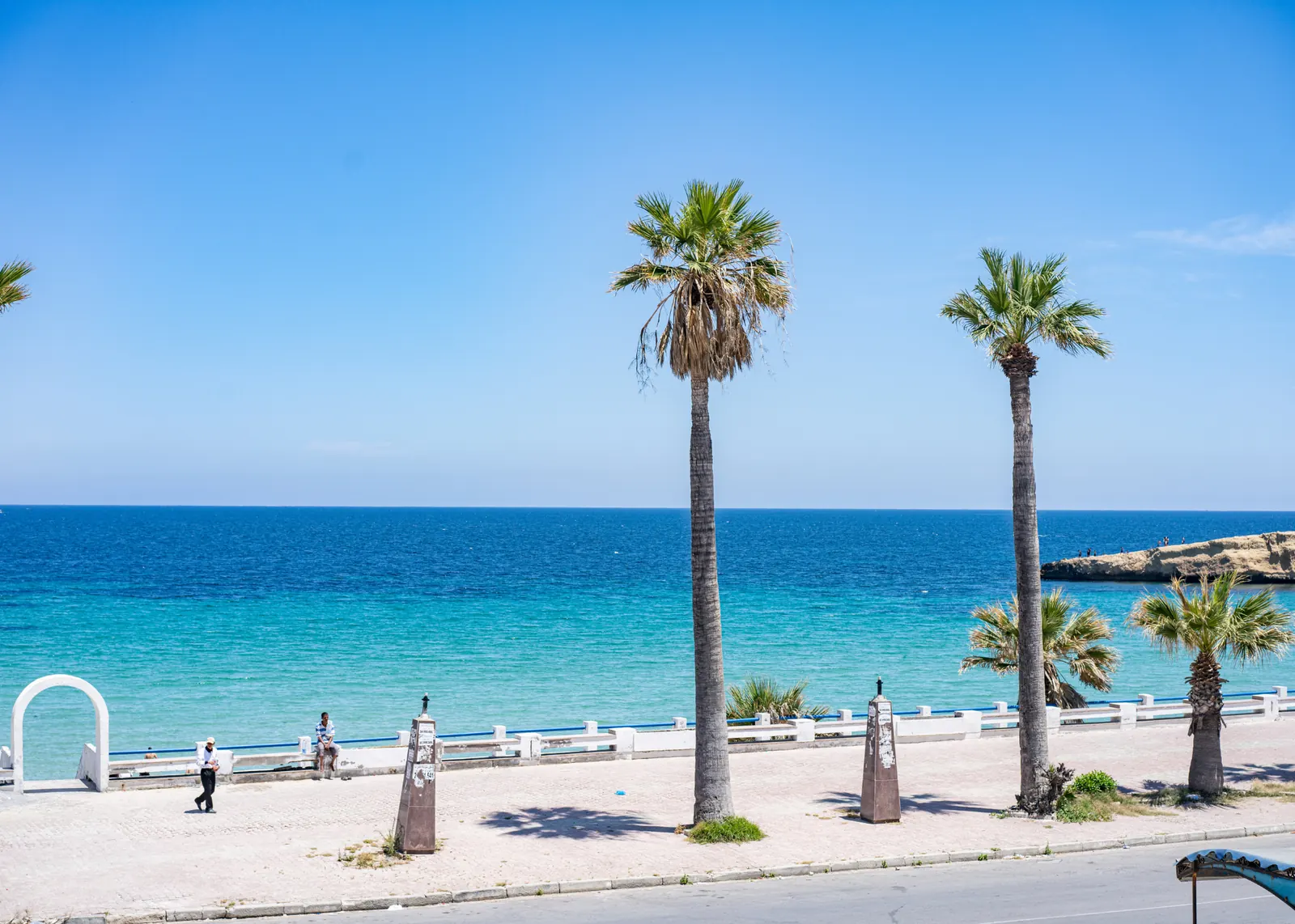
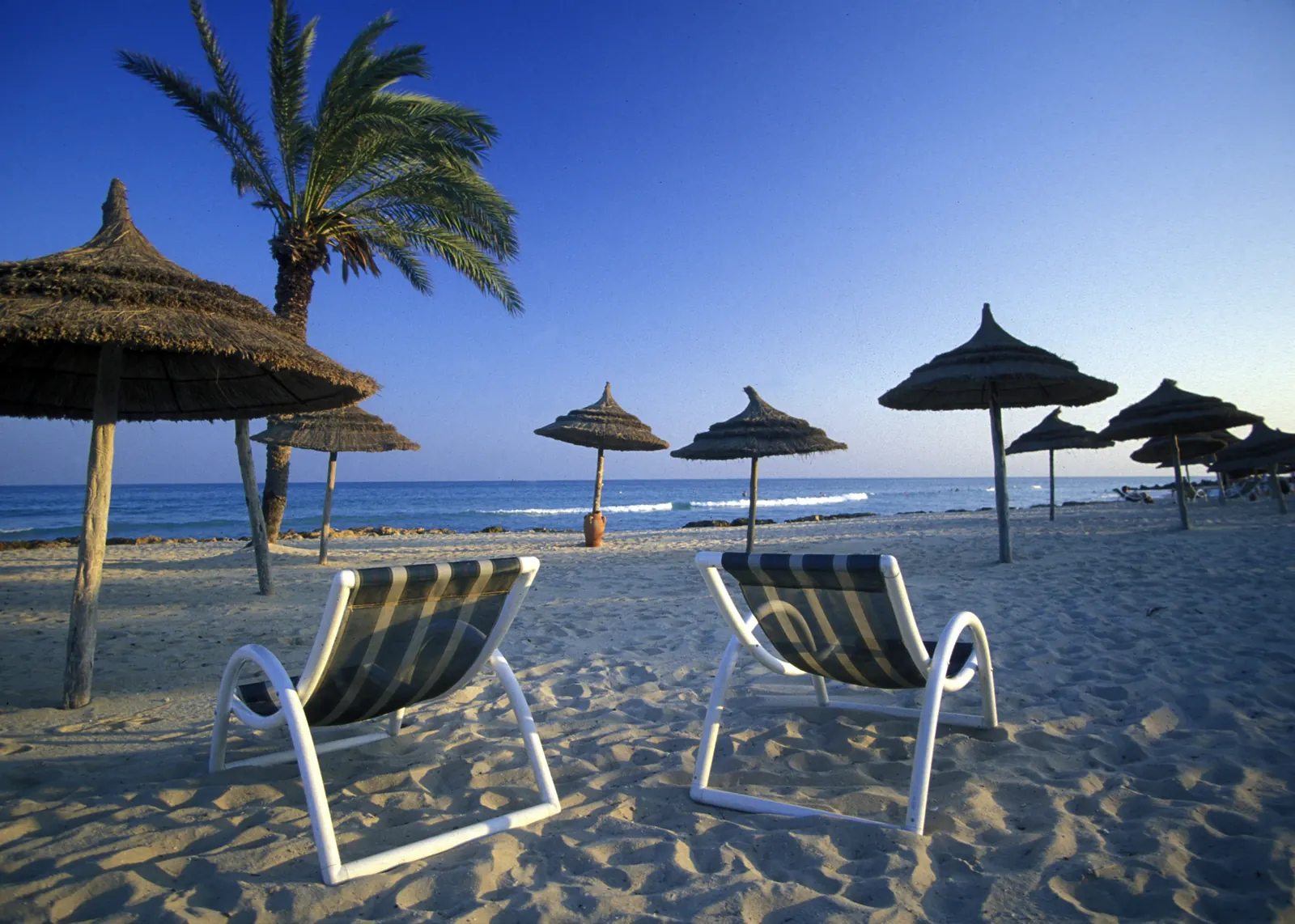
Turquoise sea and pale sand in Hammamet

Famously easy

Most travellers don't need a visa for stays under 90 days — the list of visa-free nationalities is long and includes the EU, UK, US, Canada, Australia and most of Latin America and the Gulf. Tunisia is also one of the cheapest Mediterranean destinations: a sit-down lunch is rarely more than 15 dinars (around €4.50), and a quality 4-star hotel in shoulder season often comes in under €80 a night. French is widely spoken, English is increasingly common in tourist areas, and the country is small enough that no internal flight is ever necessary.

The food, briefly

Tunisian food is Mediterranean with North African heat. Olive oil from the country's three million hectares of olive groves goes into almost everything. Harissa — the chili paste born here — sits on every table. Couscous is the Friday meal, brik (a thin pastry parcel with egg and tuna) is the universal starter, and seafood from the eastern coast is some of the best in the Mediterranean. See our full Food & Cuisine guide.
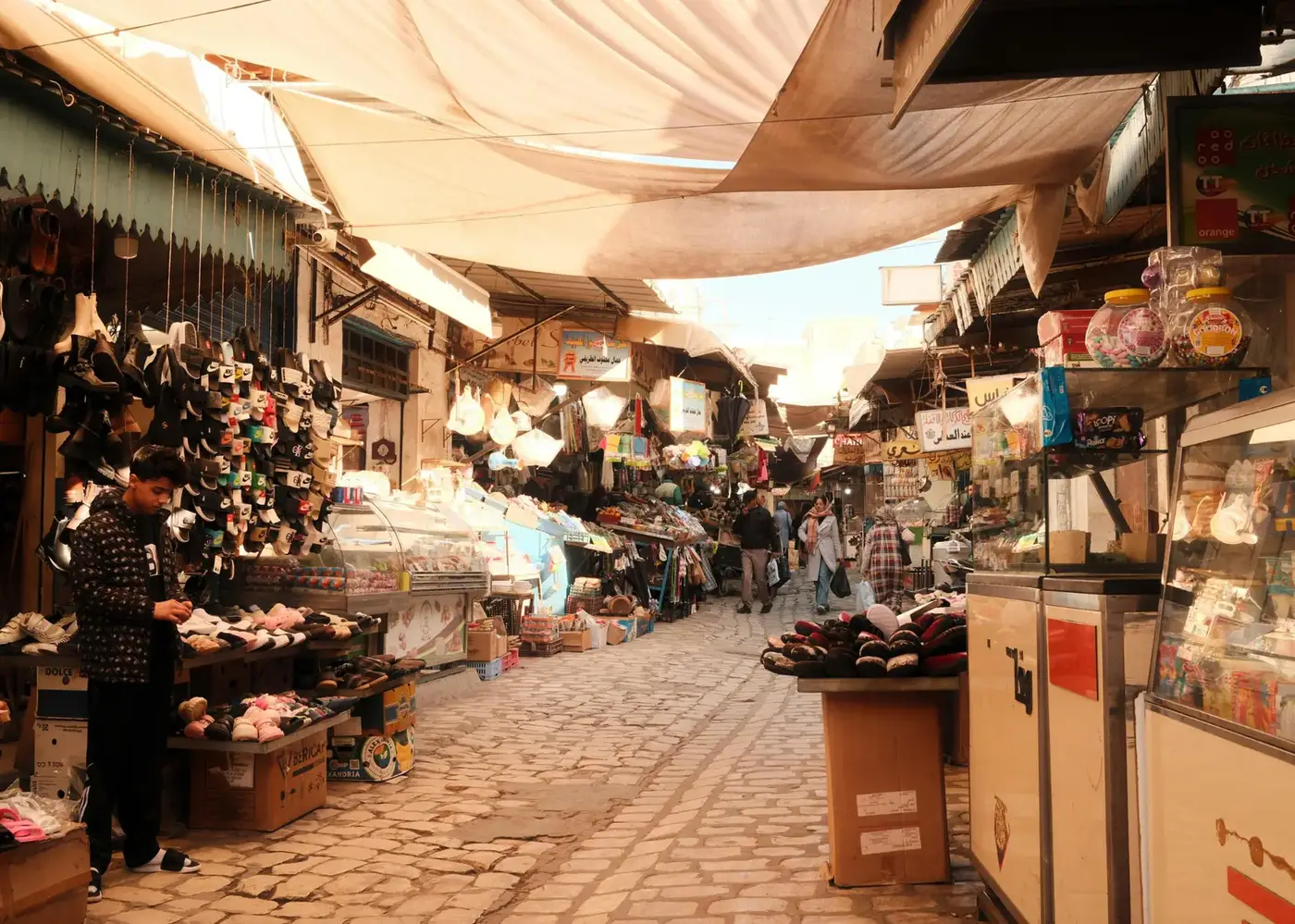
Spices stacked in a Tunisian souk
Sidi Bou Said terrace overlooking the bay
Sousse beach
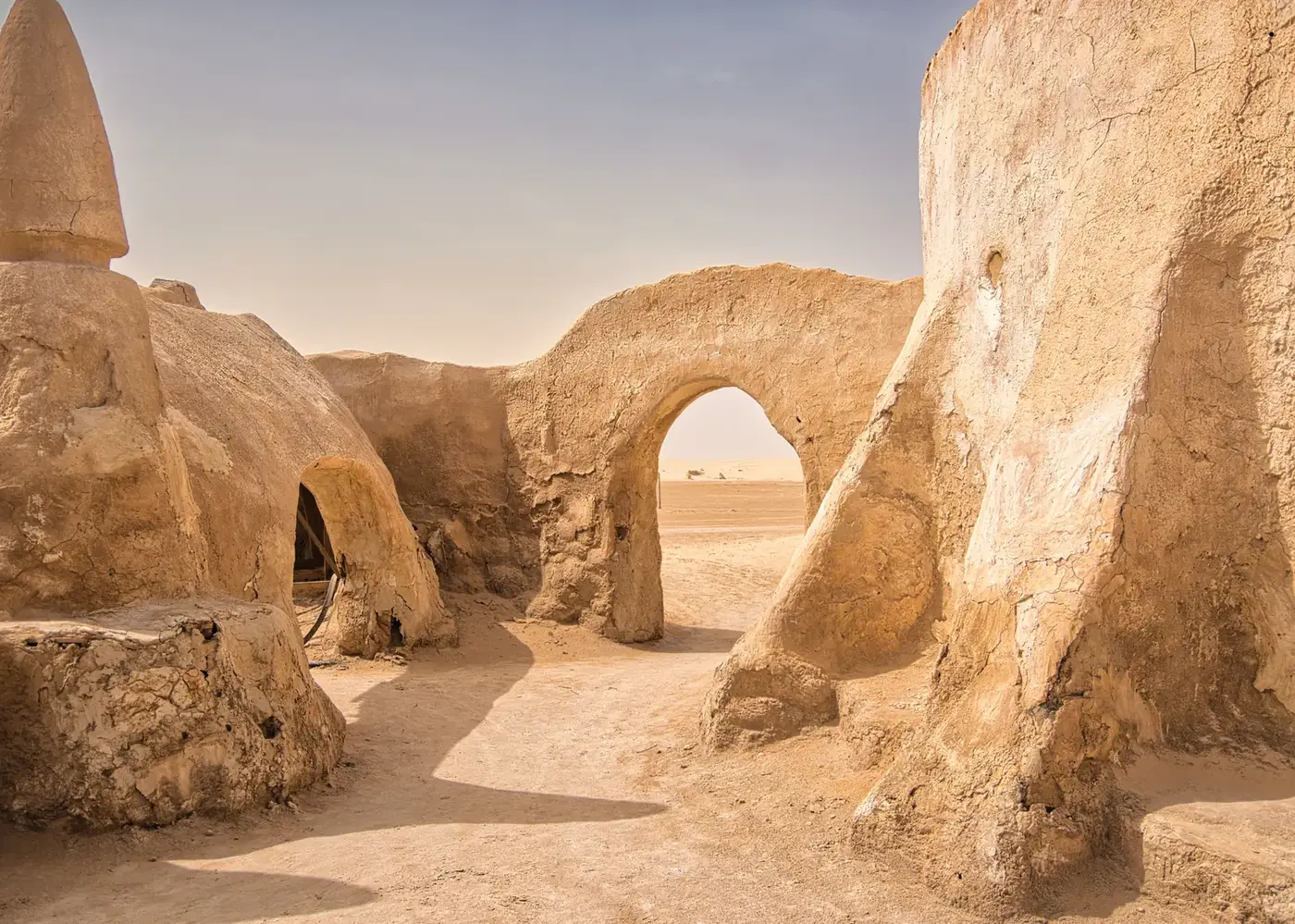
Star Wars filming location ksar in southern Tunisia
El Jem amphitheatre

Ready to plan your Tunisia trip?

Build a custom 3, 7 or 14-day itinerary in 60 seconds with our AI Trip Planner.