etunisie
Tunisian coast
Transport

Crossing to Djerba: ferry & causeway

Djerba is connected to mainland Tunisia by two routes: the Jorf–Ajim car ferry on the north-west, and the ancient Roman causeway from El Kantara on the south-east. The ferry is the famous one (free for foot passengers, fast for cars in low season, a queue-fest in summer); the causeway is the no-stress backup most rental cars take.

Free
Pedestrian crossing
~2 TND
Standard car fare
20 min
Crossing time
24/7
Continuous operation

The Jorf–Ajim ferry — how it works

The Jorf (mainland) ↔ Ajim (Djerba) crossing is a roll-on / roll-off car ferry, ~2 km wide channel, ~20 minutes of sailing. No booking — drive up, queue, board, pay on arrival on the island side. Fares are tiny: foot passengers free, motorbikes ~1 TND, cars ~2 TND, vans ~5 TND, lorries ~12 TND. Operated by a fleet of 6–8 ferries (each carries 20–24 cars and ~80 foot passengers), running essentially continuously day and night with breaks. In low season (Nov–April) it's a non-event — drive on, drive off in 30 minutes total. In peak summer (July–August) the queues on both sides can reach 1–2 hours, sometimes more on weekends. Plan accordingly — go very early morning or late evening, or take the causeway.
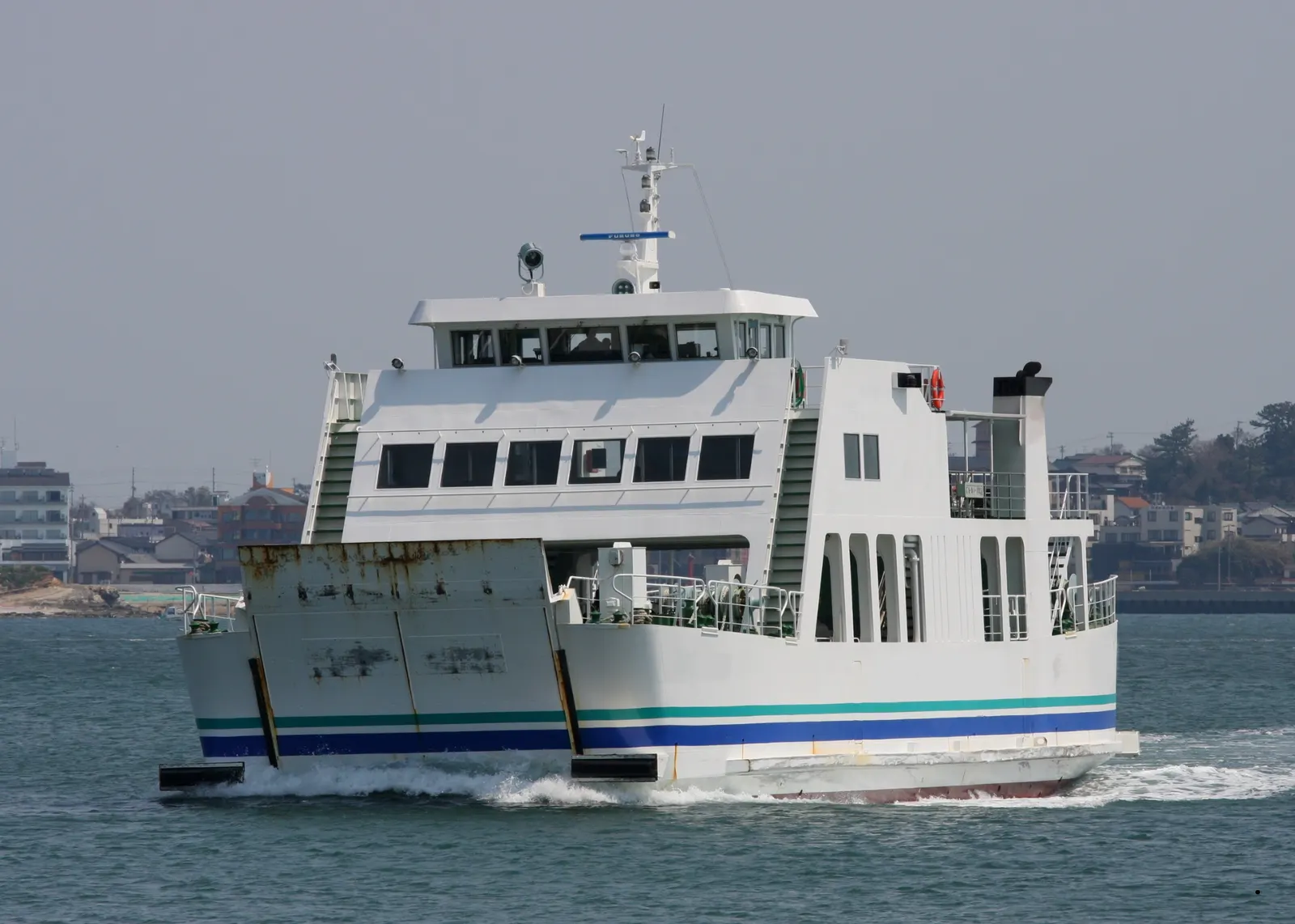
The Jorf–Ajim ferry crossing to Djerba

The El Kantara causeway — the no-stress alternative

On Djerba's south-east, the ancient El Kantara causeway (a Roman-era 7 km stone-and-earth bridge, modernised over the centuries) is the road link from Zarzis on the mainland to Djerba's south. No ferry, no queue, no fare. Just drive. The downside: it's a longer route from Tunis or the central coast (you go via Médenine and Zarzis), adding 30–60 minutes to the total drive vs. the ferry on a low-traffic day. Pick the causeway if: it's mid-July to August, you're driving from Sfax / Tunis with no margin in your schedule, you're nervous about the ferry, or you want to see Zarzis on the way. Most rental-car GPS routes default to the ferry. Override it manually if you want to take the causeway.

Foot-passenger and louage tips

If you don't have a car: take a louage from Tunis (Bab Alioua) or Sousse / Sfax to 'Jorf' specifically (~25 TND from Tunis, ~5–6 hour ride). Walk straight onto the ferry — free, no ticket. ~20 minutes across. On the Ajim side, louages and shared taxis wait by the ramp to take you onward to Houmt Souk (the main town, 25 minutes / 5 TND) or directly to the resort zone of Sidi Mahrez / Aghir. This combo is the cheapest way from Tunis to Djerba — under 35 TND total, ~7–8 hours door-to-door. The flight (Tunis–Djerba ~1h, €40–€80 one way) is dramatically faster but obviously pricier.
Foot passengers and louages at the ferry terminal

Peak-season strategies

If you're driving and arrive Djerba in July or August, the inbound ferry queue is typically heavier in the morning / late afternoon. The outbound (Djerba → mainland) queue is heaviest on Sunday evenings (locals returning). Tactics that work: • Drive overnight — 02:00 to 05:00 the queues vanish. • Take the causeway on the inbound, take the ferry on the outbound when you're not in a rush. • If you have a flight to catch from Tunis after a Djerba stay, leave the island the night before and stay in Sfax — it eliminates ferry-queue stress. Air-con your car for the wait. Bring water. The queue is often in direct sun.

The bridge project (longer-term)

There is a long-discussed project to build a permanent bridge between Jorf and Ajim, replacing the ferry. As of 2025 it remains an announced project without a construction start date — don't plan around it. The ferry and the El Kantara causeway are your only ways onto and off the island for the foreseeable future. If you'd rather not take the ferry at all: fly directly into Djerba-Zarzis (DJE), 5–15 minutes from the resort zones. Most European tour operators do exactly this.

Ready to plan your Tunisia trip?

Build a custom 3, 7 or 14-day itinerary in 60 seconds with our AI Trip Planner.