etunisie
Tunisian diaspora family together at the beach
Travel Style

Tunisia for the diaspora

Every July and August, more than 2 million Tunisians living abroad come home. If you're one of them — or married to one — you already know the joy and chaos of the summer return: the family obligations, the wedding circuit, the heat, the queue at the port of La Goulette. This page is the practical guide we wish we'd had: getting there cheaper, the OMRA quota, car shipping, ferry vs plane, and how to actually enjoy the holiday between the family lunches.

2M+
Tunisians abroad return each summer
Jul–Aug
Peak return season
20–22h
Marseille → Tunis ferry
€350–€700
Summer flight Paris → Tunis return

The OMRA quota — duty-free for diaspora

If you're registered with a Tunisian consulate abroad as a 'Tunisien Résident à l'Étranger' (TRE), you qualify for the OMRA (Régime Particulier des Tunisiens Résidents à l'Étranger) — an annual personal-use duty-free quota that lets you bring household goods, electronics, baby gear and small appliances into Tunisia without paying customs duty. The quota is calculated per family per year, currently capped at a total declared value of around 6,000 TND (≈ €1,800), with sub-quotas per category. You declare goods at your port or airport of entry, present your TRE consular card, and pay only a small symbolic admin fee. It's the single biggest financial perk of being TRE — and the reason most families ship a car-load of goods on the summer ferry instead of flying. Values, eligible goods and quotas change — always check the current rules at your nearest Tunisian consulate before shipping.

Diaspora family loading the car for the summer return

Ferry vs plane — the real maths

The two summer ferry routes to know: CTN and GNV operate Marseille ⇄ Tunis (≈ 20–22 h) and Genoa ⇄ Tunis (≈ 23–26 h), with seasonal Civitavecchia and Salerno routes added in July–August. A family of 4 with a car, a 2-berth cabin, Marseille → Tunis in mid-July: roughly €1,000–€1,400 return. The same family flying with checked bags: €1,400–€2,200, and you arrive without a car. The ferry wins financially as soon as you're shipping more than two big suitcases or bringing children, scooters, or anything bulky. Book the ferry as early as January for July–August — popular dates sell out by April. CTN frequently runs early-bird discounts for TRE cardholders. Flights: Tunisair, Nouvelair and Transavia from Paris/Lyon/Marseille; Air France and easyJet on selected dates. Tunisair Express adds Lille, Toulouse and Strasbourg in summer.

Avoid the worst of summer — when to actually go

Returning between 20 July and 25 August means peak heat (38–42°C inland), peak prices, peak crowds at every beach in Hammamet and the Sahel, and 3-hour queues at the La Goulette ferry terminal. If you have flexibility: aim for the last week of June through the first week of July, OR from 25 August onwards. You get the same warm sea, half the crowds, materially cheaper flights, and your kids still catch their cousins (Tunisian schools restart in mid-September). For non-school families, late September and early October is the diaspora secret — sea is still 25°C, the festival circuit (Carthage, Sahara) is in full swing, and you can finally get a table at Dar El Jeld in Tunis.
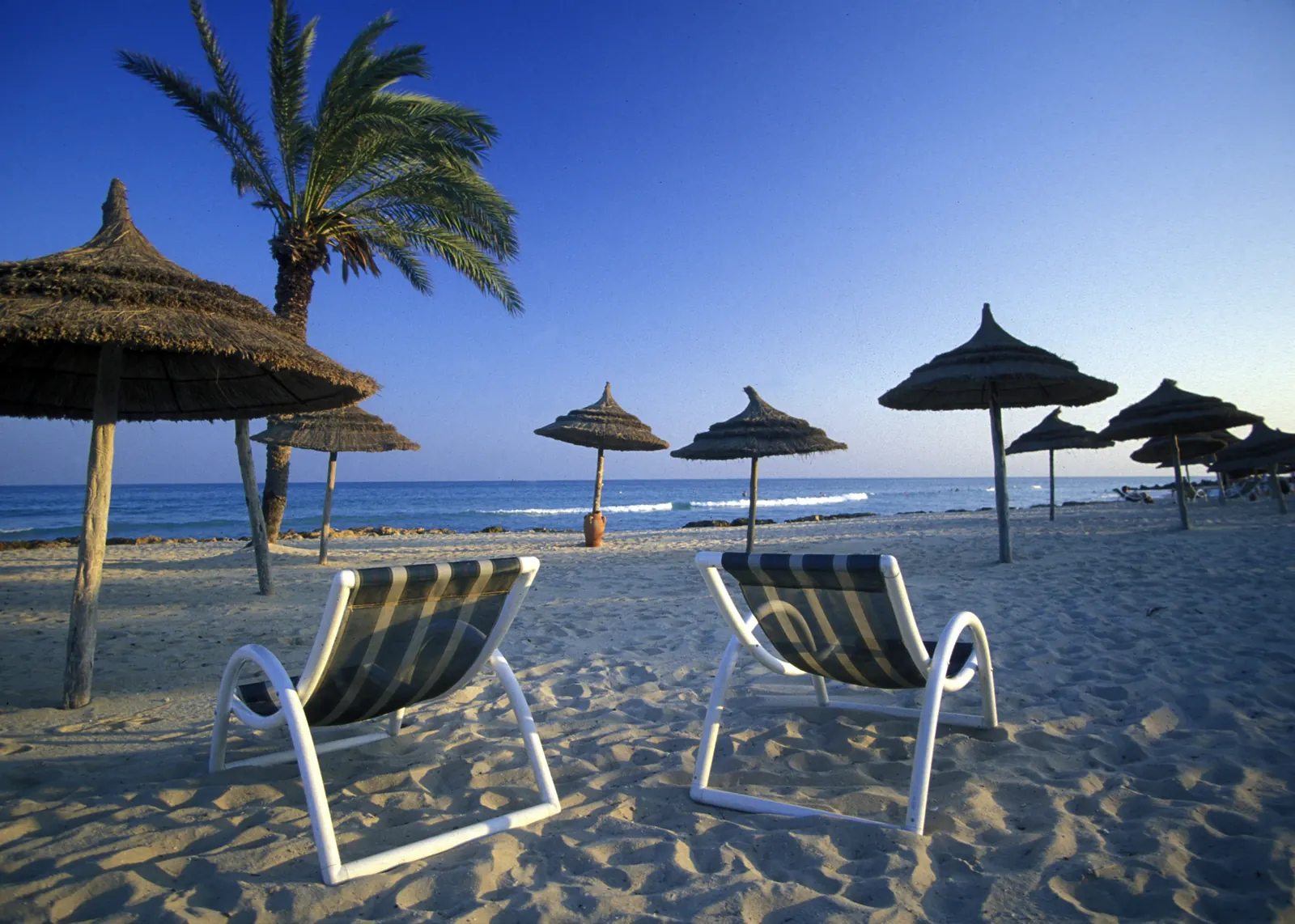
Sousse beach in summer
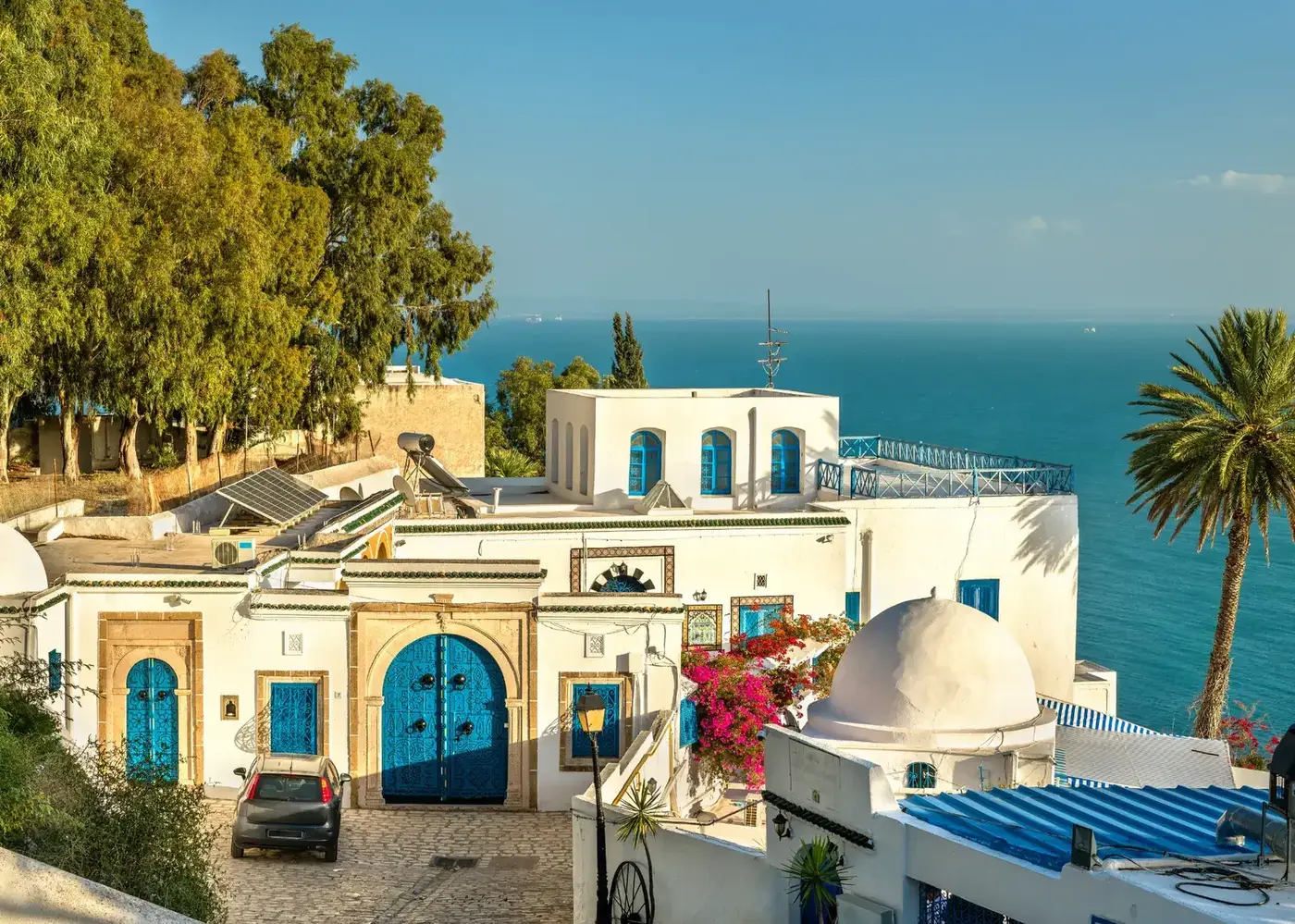
Sidi Bou Said village

Beyond the family — actually visiting your country

The single biggest mistake the diaspora makes: spending three weeks doing the Tunis–Sahel family circuit and never leaving it. If your kids were born abroad, they probably haven't seen Sidi Bou Said properly, or El Jem, or Tozeur, or the medina of Kairouan, or the Sahara. Block out a 3-day road trip in the middle of every return. Two classic loops: (1) South — Tunis → Kairouan → El Jem → Sfax → Djerba (3 nights) → back via Matmata; (2) North — Tunis → Sidi Bou Said → Bizerte → Tabarka → Aïn Draham (cooler in summer) → Dougga ruins on the way home. Both are 4–5 days at a relaxed pace. Your cousins will think you're showing off, and your parents will be quietly proud.

The wedding circuit

If you return in July–August, you will be invited to weddings. Tunisian weddings traditionally run 3–7 nights (henna, outhia, the actual wedding, the family lunch the next day…). A few survival rules: bring at least one formal outfit per major night; cash gifts in a sealed envelope are standard (€50–€150 depending on closeness); do not arrive at the time written on the invitation — add 90 minutes; pace your eating, the food keeps coming until 2am; the bride and groom often don't appear until midnight. If you're hosting your own destination wedding for diaspora guests, the all-inclusive resorts of Hammamet (Mövenpick, La Badira) and the riads of Sidi Bou Said and the medina are the two go-to formats.
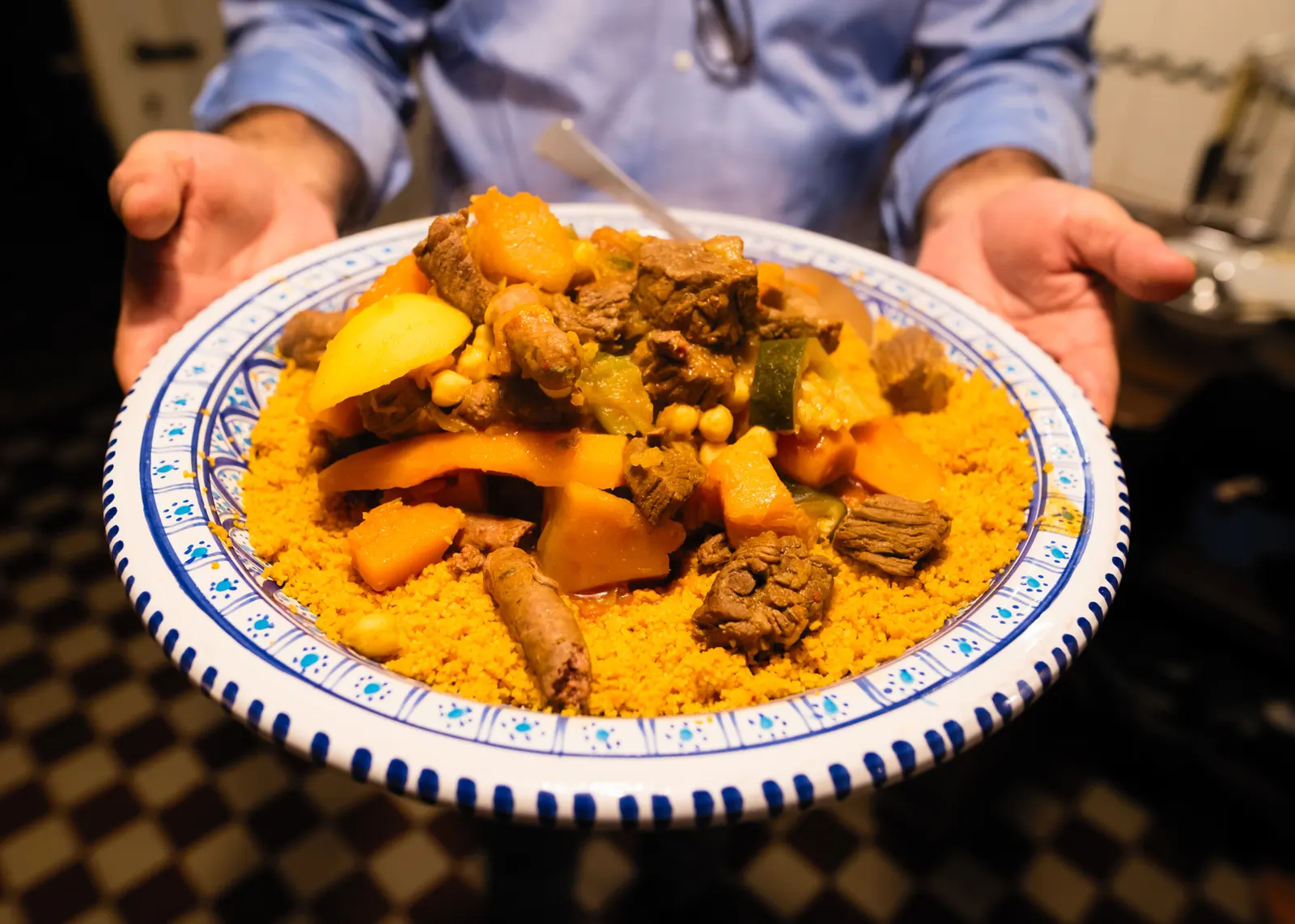
Traditional Tunisian couscous

Practical notes

Money: Tunisian dinar (TND) is non-convertible — you cannot legally take it out of the country. Bring euros/USD/GBP and change progressively. ATMs in cities work fine with Visa/Mastercard. Driving: a foreign driving licence is valid for 1 year. If you stay longer, you need to convert. Roads to the Sahel and the south are paved and well-signed; mountain roads in the north are narrower than you remember. Mobile: Ooredoo and Orange tourist SIMs from €10 give 10–20 GB for a month — much cheaper than EU roaming. Documents: keep your TRE consular card on you; you'll need it for OMRA, and it's accepted as ID by the police.

Plan your summer return

Compare ferry vs flight options, find a road-trip itinerary that fits between the family lunches, and lock in dates before prices spike.