etunisie
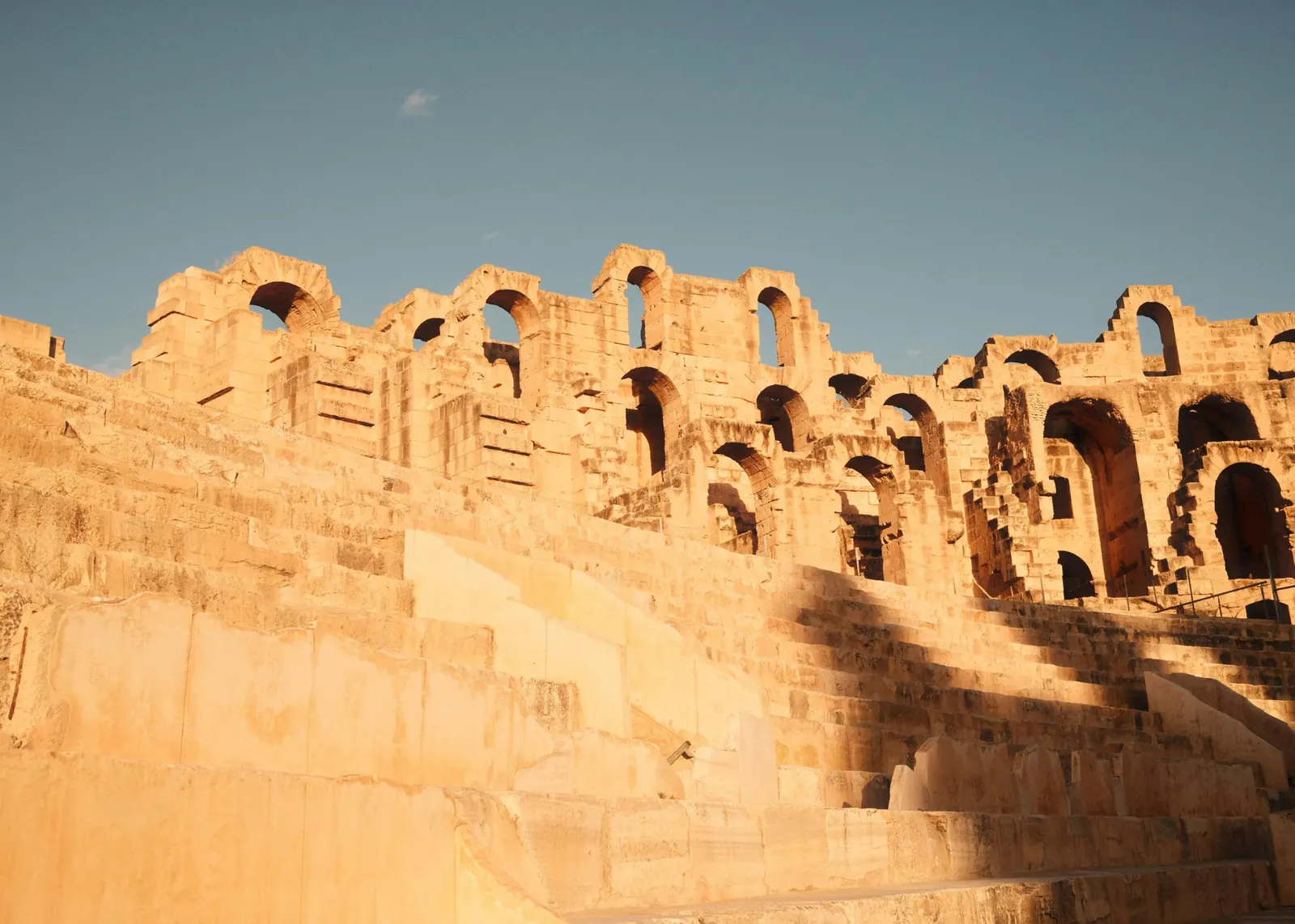
Detail of the El Jem Roman amphitheatre
Things To Do

Roman ruins: an empire's quiet southern half

Tunisia was Rome's breadbasket and one of its most prosperous provinces — and the country preserves some of the most spectacular Roman sites anywhere in the empire. The amphitheatre at El Jem alone is reason enough to come, but it's the start, not the end.

3rd c. AD
El Jem amphitheatre
35,000
Spectator capacity
8 TND
Avg. site entry (~€2.5)
200+
Roman sites in Tunisia

El Jem — the Colosseum of Africa

Built around 238 AD, the amphitheatre at El Jem is the third largest in the Roman world after Rome's Colosseum and the (mostly destroyed) one at Capua — and far better preserved than either. Three storeys of arcades, a restored arena floor, and underground tunnels you can walk through where gladiators and beasts waited. In July and August, an international symphonic festival uses the amphitheatre as a venue: an extraordinary thing to attend. Day-trip from Sousse, Mahdia or Hammamet (1–1.5 hours), or a stop on the way south. Allow 1.5–2 hours.
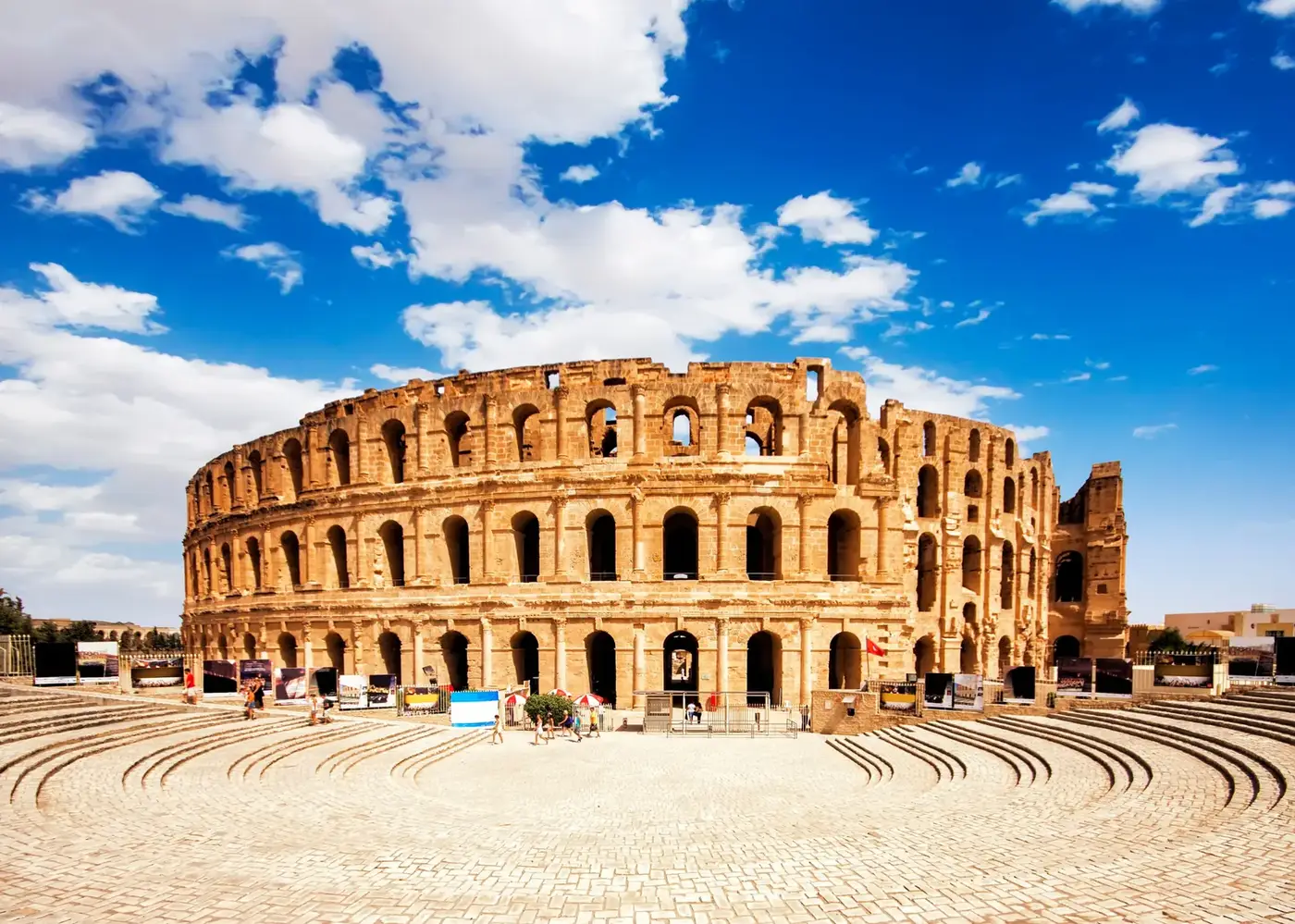
The El Jem amphitheatre seen wide
Carthage — what's left of Rome's great rival

Carthage — what's left of the great rival

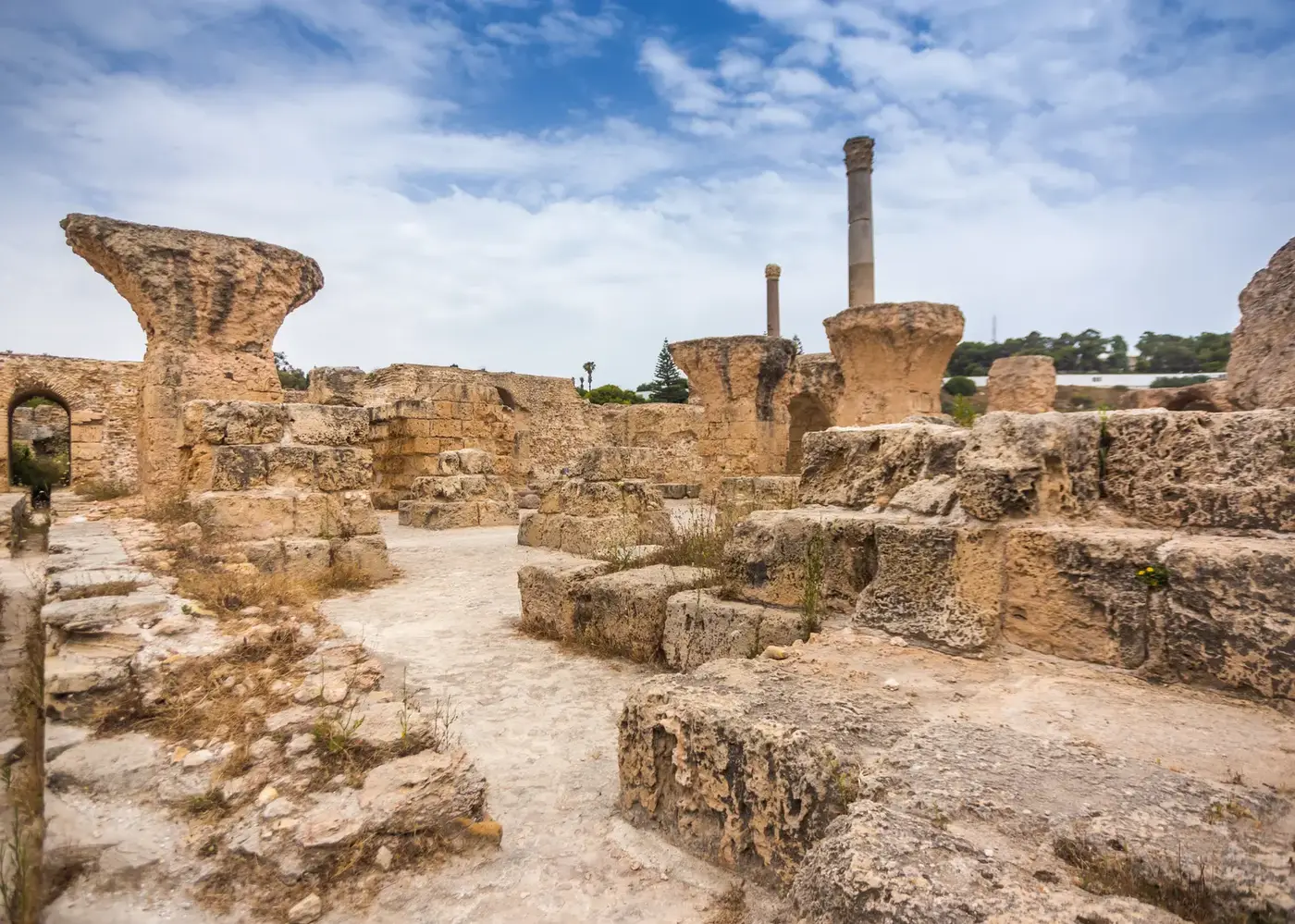
The Romans burned Carthage in 146 BC and then rebuilt it as the second city of their empire. Both cities have left traces, scattered across the leafy modern Tunis suburb of Carthage. The highlights: The Antonine Baths — the largest Roman thermal complex outside Rome, with massive arches still standing on the seafront. The Punic ports — twin circular harbours of the original Phoenician city. The Roman amphitheatre and the Tophet sanctuary. The Bardo Museum (in Tunis itself) holds the Roman mosaics lifted from Carthage's villas — the world's finest collection. A good half-day from Tunis. Buy the combined ticket (12 TND).

Dougga — the most complete Roman city

On a hill in the country's interior, two hours west of Tunis, lies Thugga — the best-preserved Roman city in North Africa, with a paved forum, a beautiful Capitol temple still nearly intact, baths, a theatre, and stretches of original streets you can walk down. UNESCO-listed. Far quieter than El Jem and even more atmospheric. Come for sunrise or late afternoon for the best light. Easy day-trip from Tunis with a rental car or a private driver.
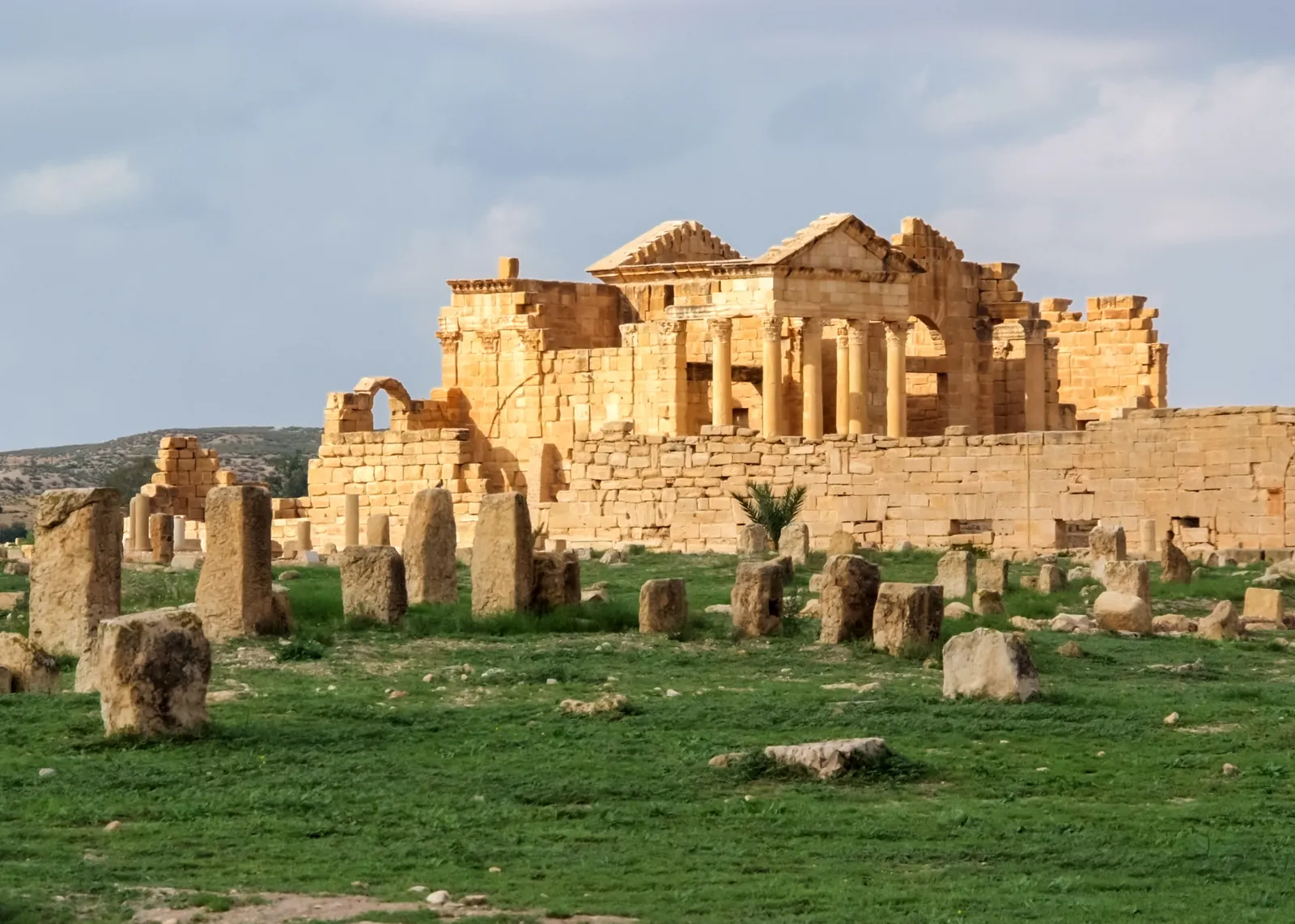
Roman ruins of Sbeitla

Sbeitla & the Christian Roman south

Sufetula (modern Sbeitla), in central Tunisia, has three intact temples in a row and the impressive ruins of an early Christian basilica — the country's most striking late-Roman / early-Byzantine site. Combine with Kairouan for a long day-trip from Tunis or Hammamet. Maktar, Bulla Regia (with its famous below-ground villas designed to escape the summer heat), Utique and the seaside theatre at Carthago Nova are all worth adding for serious Roman-history travellers.

Bardo Museum — don't skip it

If you visit only one museum in Tunisia, make it the Bardo. Housed in a former Hafsid palace just west of Tunis, it holds the world's largest collection of Roman mosaics, lifted from villa floors all over the country and re-mounted on the walls. Hours of staring. Plus Punic, Christian, Islamic and Ottoman wings. Allow 2.5–3 hours. Open mornings; check current days. Easy by Bolt, taxi or the metro from central Tunis.
Book with confidence

Tours to Tunisia's Roman sites

Skip-the-line entry, expert guides and day trips from Tunis, Sousse and Hammamet to Carthage, El Jem and Dougga.

Powered by GetYourGuide. We may earn a commission on bookings — at no extra cost to you.

Ready to plan your Tunisia trip?

Build a custom 3, 7 or 14-day itinerary in 60 seconds with our AI Trip Planner.