etunisie
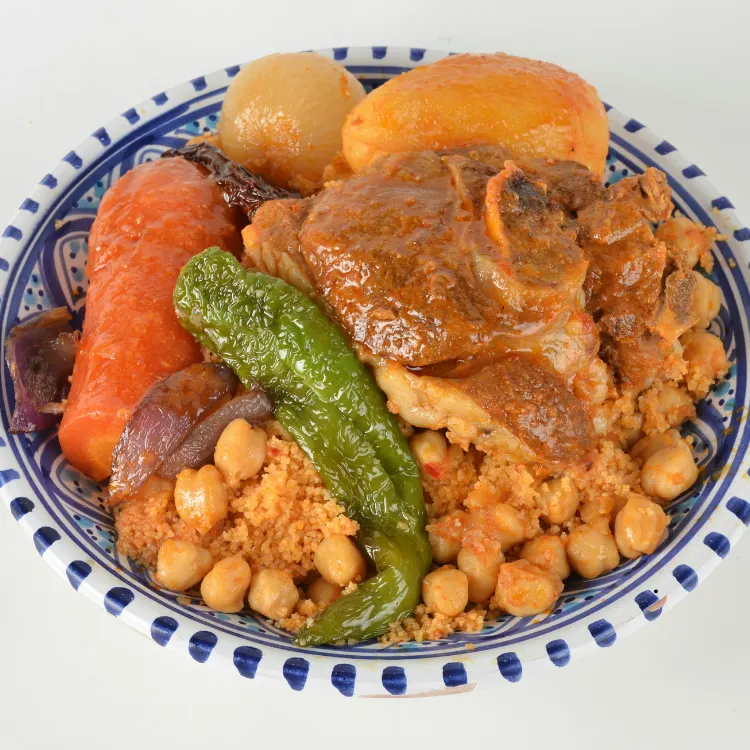
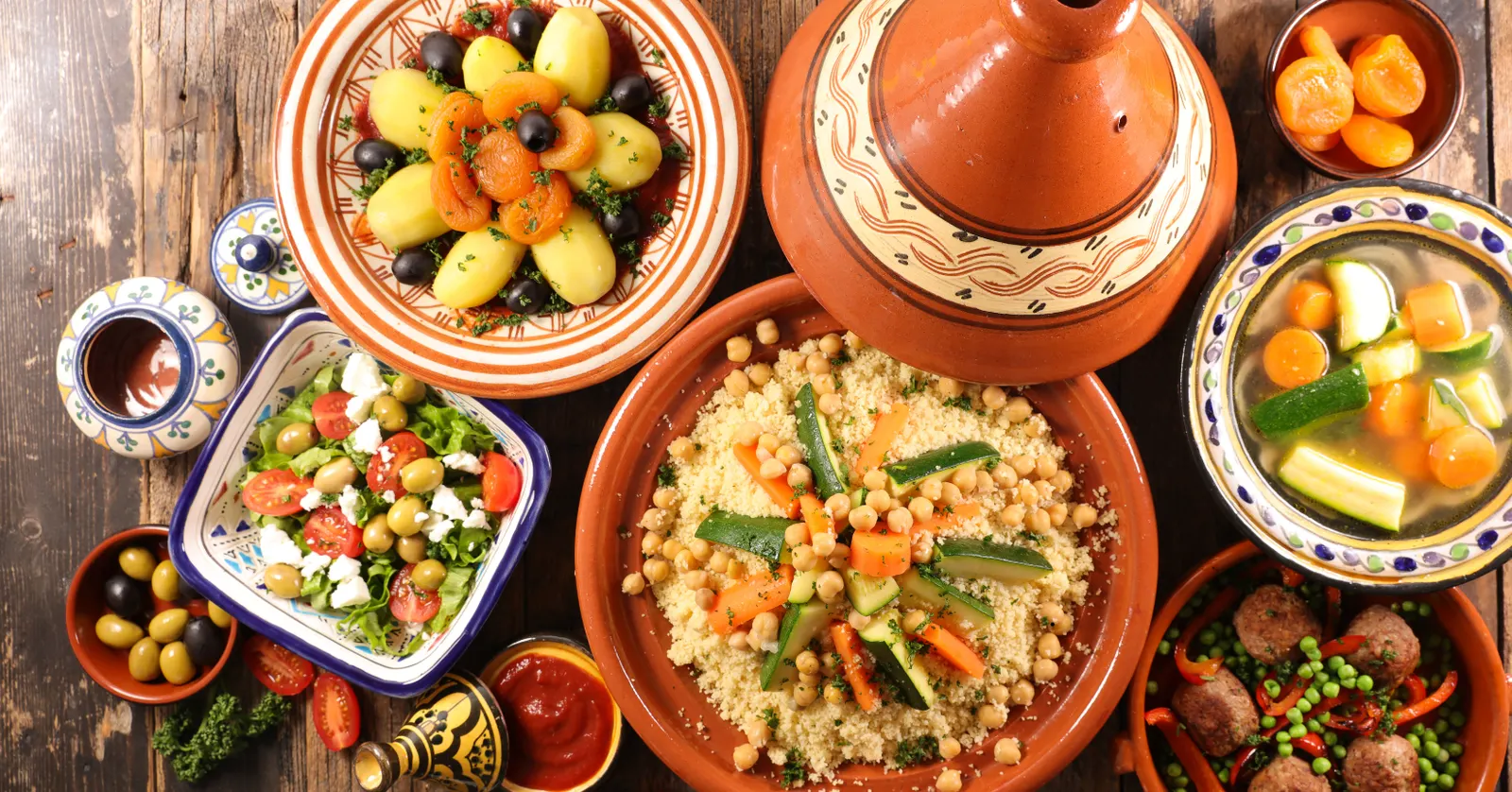
A plate of traditional Tunisian couscous with lamb and vegetables
About Tunisia

Food & cuisine: Mediterranean with heat

Tunisian cooking sits at the crossroads of three traditions — Mediterranean, North African and Arab-Andalusian — and it leans warmer and spicier than its Moroccan or Turkish neighbours. Olive oil from three million hectares of native groves, harissa on every table, the freshest seafood in the Maghreb, and a date that may be the world's best.

3M ha
Olive groves
Top 4
World olive oil exporter
Deglet Nour
Famous date variety
Harissa
National condiment

The dishes you have to try

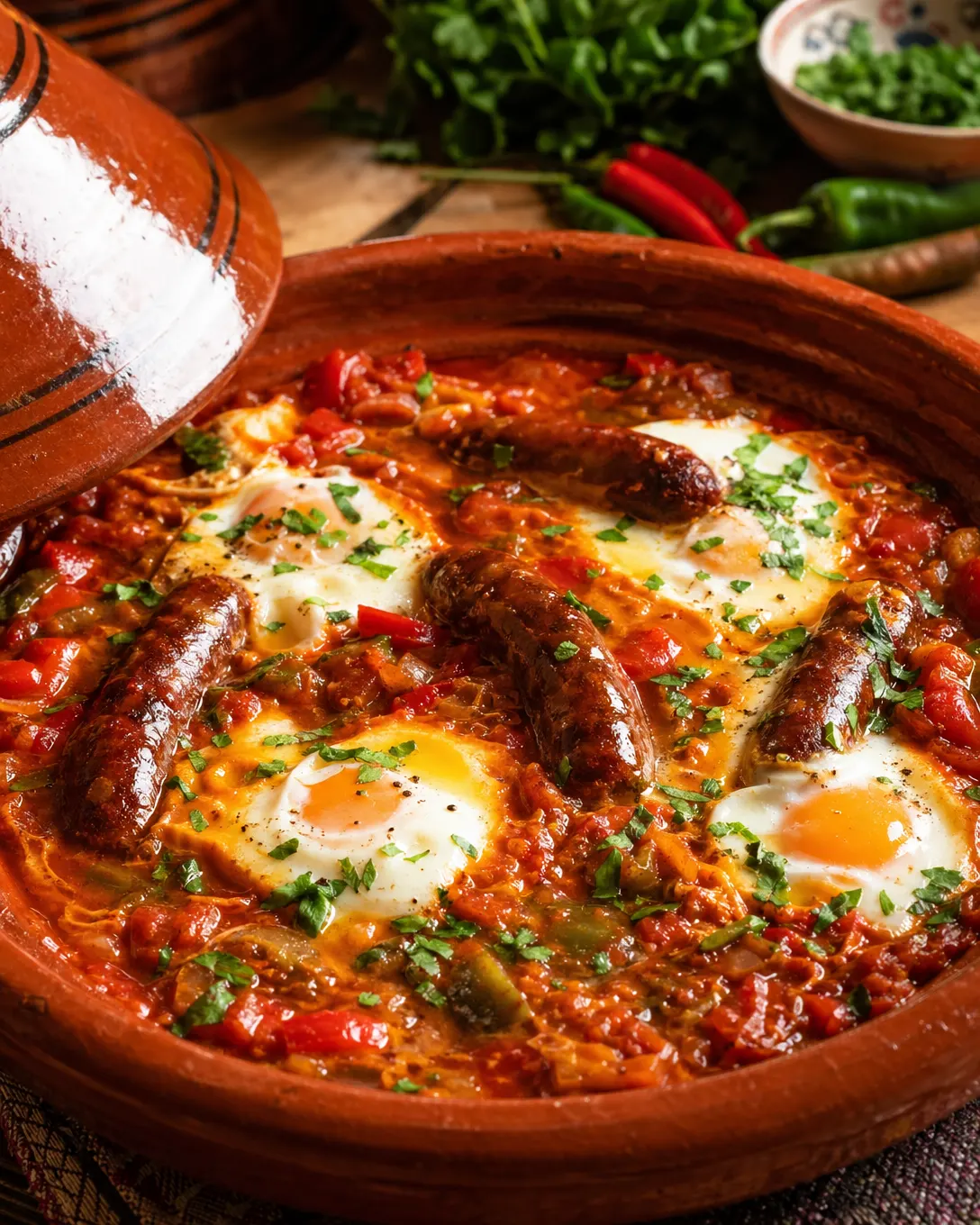
Couscous: the Friday meal. Steamed semolina topped with vegetables, chickpeas and lamb, fish or merguez sausage. Every region has a version — the fish couscous of Sfax is unforgettable. Brik à l'œuf: a thin, crispy pastry triangle wrapped around a runny egg, tuna, parsley and capers. Eat it carefully — the yolk runs. Ojja: a fiery shakshuka of tomato, harissa, peppers and eggs, often with merguez or shrimp. Breakfast, lunch or dinner. Lablabi: a chickpea soup with stale bread, harissa, capers, tuna, olive oil and a soft-boiled egg, mixed at your table. Cheap, hot, addictive. Mechouia: grilled-pepper and tomato salad with tuna and egg — the universal mezze. Tajine tunisien: nothing like the Moroccan version — here it's a baked egg-and-cheese frittata with chicken or tuna.
Tunisian brik à l'œuf — crispy pastry triangles with lemon
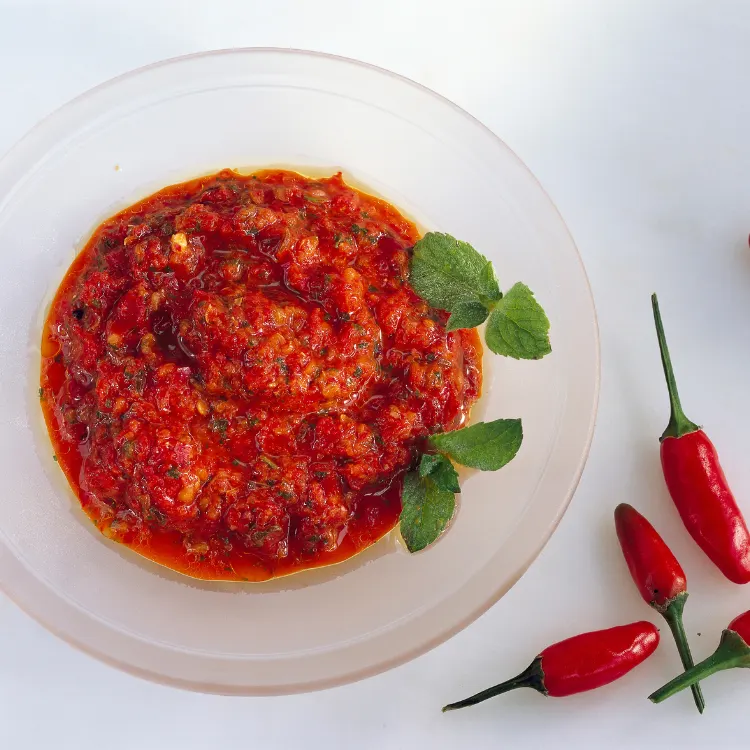
Tunisian harissa paste with dried chillies, garlic and cumin

Harissa — the soul of the Tunisian table

If one ingredient defines Tunisian cooking, it's harissa: a brick-red paste of sun-dried chillies, garlic, caraway, coriander and olive oil. Stirred into stews, smeared on sandwiches, served as a free condiment with bread the moment you sit down. UNESCO inscribed it on the list of world cultural heritage in 2022. The best harissa in the country comes from the Cap Bon peninsula, where the chillies are grown, sun-dried for ten days and pounded the old way. Look for jars from Le Phare du Cap Bon, Sicam, or any of the small Nabeul producers — and try the smoked variant ('harissa fumée') if you find it. Tunisians eat harissa in three speeds: 'shwaya' (a little, for visitors), 'normal' (which is already very hot), and 'barsha' (a lot, for locals only).

Olive oil — three million hectares of liquid gold

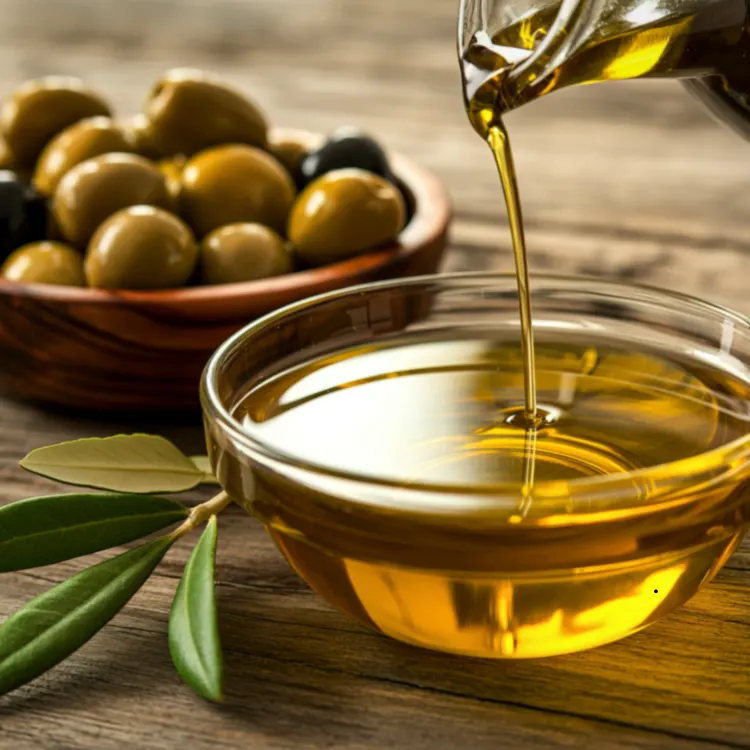
Tunisia is one of the four largest olive-oil producers on earth — sometimes outranking Italy and Spain in years of poor European harvest. Three million hectares of olive groves, mostly around Sfax and the Sahel, much of it organic, much of it ancient (the Roman emperor Hadrian planted some of the trees still in production today). Tunisian olive oil is intensely fruity, slightly peppery, with a long bitter finish — the same chemistry as the best Tuscan oils, at a third of the price. Single-estate Domaine Adonis, Olivko, Cap Bon, and the cooperative oils of the Sahel are all worth seeking out. The November harvest is the best time to visit a working press. Bring an empty bottle and a litre will be cheerfully filled, straight from the tank.
Fresh Tunisian olive oil with crusty bread, in an olive grove
A traditional Tunisian couscoussier on a charcoal stove

Couscous Friday — the national ritual

Every Tunisian kitchen makes couscous at least once a week, and almost always on Friday. Hand-rolled semolina is steamed in a couscoussier over a bubbling stew of lamb, fish, chicken or merguez with vegetables and chickpeas, then mounded on a wide platter and shared. Regional versions matter. Sfax: fish couscous, the most prized version, with grouper or sea bream. Tunis: lamb-and-quince couscous in winter. Djerba: a small-grained octopus couscous found nowhere else. The south: a smoky 'kous kous bedwi' served with smen (aged butter) and a side of buttermilk. If you're in Tunisia on a Friday, plan around it: most family-run restaurants serve a Friday couscous as their special, and it sells out by 2 pm.

Seafood, simply done

The eastern coast — from Bizerte down to Mahdia, Sfax and the Kerkennah Islands — supplies the country's restaurants with octopus, sardines, sea bream, sea bass, prawns and the local pride: rouget (red mullet). The Tunisian way is restraint: a hot grill, lemon, olive oil, salt and a little harissa on the side. For the freshest experience, eat in a portside restaurant in La Goulette, La Marsa, Mahdia or Houmt Souk in Djerba. Order the fish whole, by weight, after picking it from the ice.
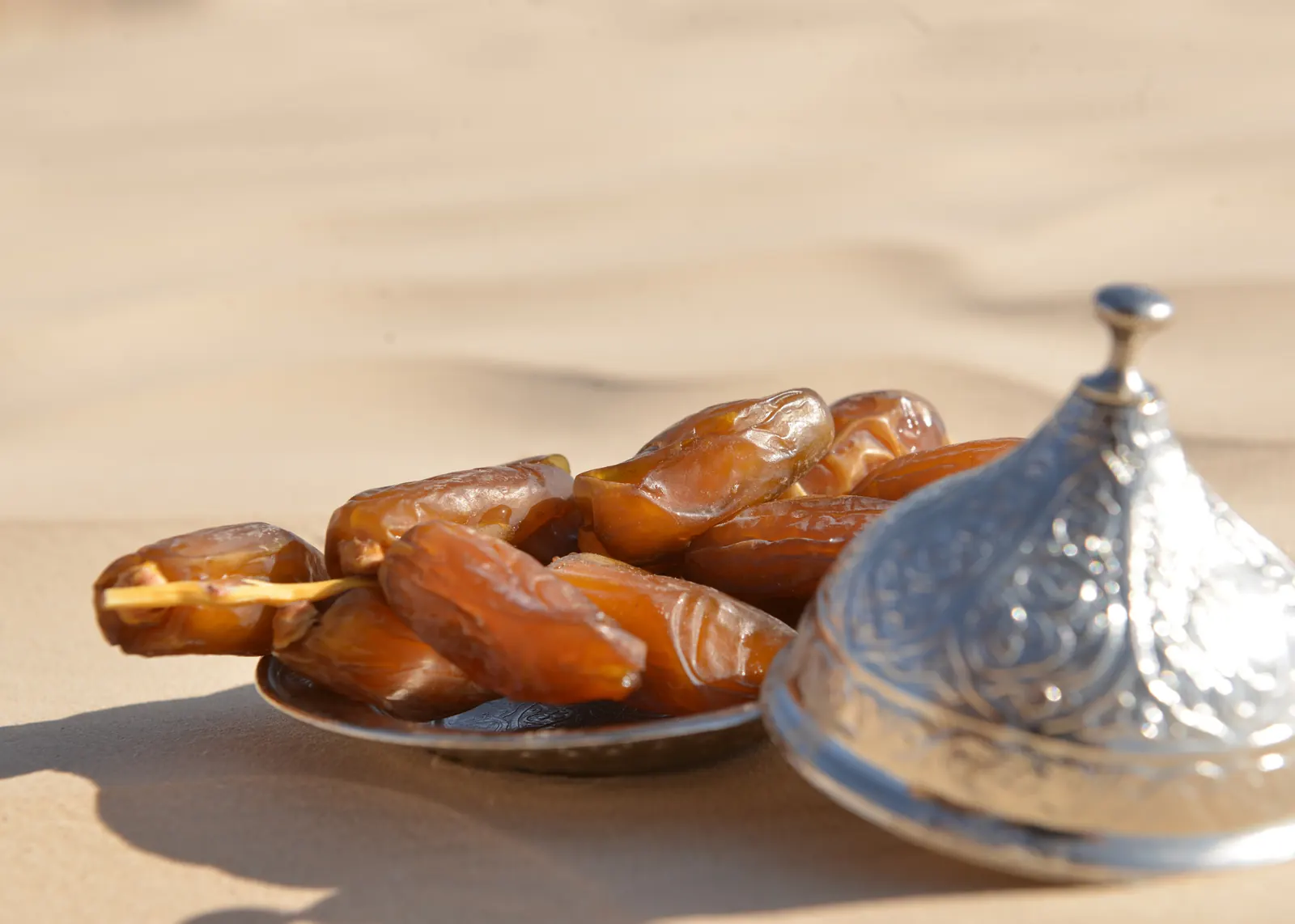
Fresh Tunisian dates on the branch

Sweets and the date harvest

Tunisian sweets are flavoured with rose water, orange blossom, sesame and pistachio. Look for makroudh (semolina pastries with date paste, soaked in honey — Kairouan is the capital), zlabia (deep-fried spirals in syrup, especially during Ramadan), bouza (millet-and-almond cream) and assida zgougou (a velvety cream of pine seeds eaten on the Prophet's birthday). And the dates. Tunisia's Deglet Nour — the 'queen of dates' — is grown in the southern oases of Tozeur, Nefta and Kebili. They're translucent, light amber, almost honey-like. Buy them on the branch in October–November and you'll never look at a supermarket date the same way. Full guide: see our pages on Tunisian sweets & pastries and our food tours.

What to drink

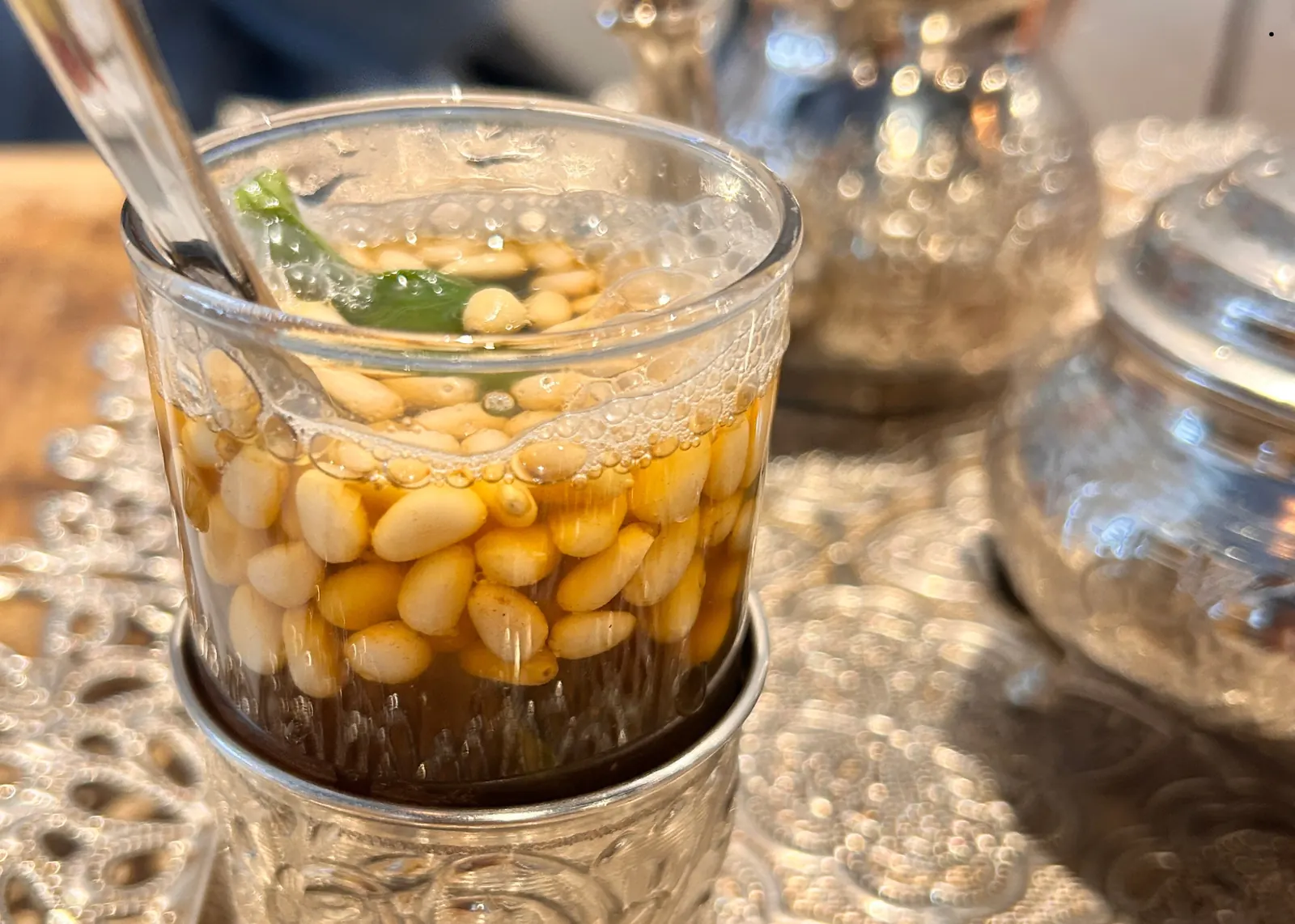
Mint tea: the universal welcome. Pine nuts on top in winter, peppermint in summer, always heavily sweetened. Coffee: French-style espresso (a 'direct'), a Turkish-style 'qahwa arbi' for the brave, and excellent café au lait everywhere. Fresh juice: in summer the streets are lined with stalls pressing pomegranate, orange and prickly-pear juice for a couple of dinars. Wine: yes — Tunisia has been producing wine since the Carthaginians. Look for the rosés of Mornag and the reds of Magon and Domaine Neferis. Beer (Celtia) is everywhere. Boukha: the local fig brandy. Strong, served chilled, mostly enjoyed by the Jewish community of Djerba and curious visitors.
Tunisian mint tea poured from a height
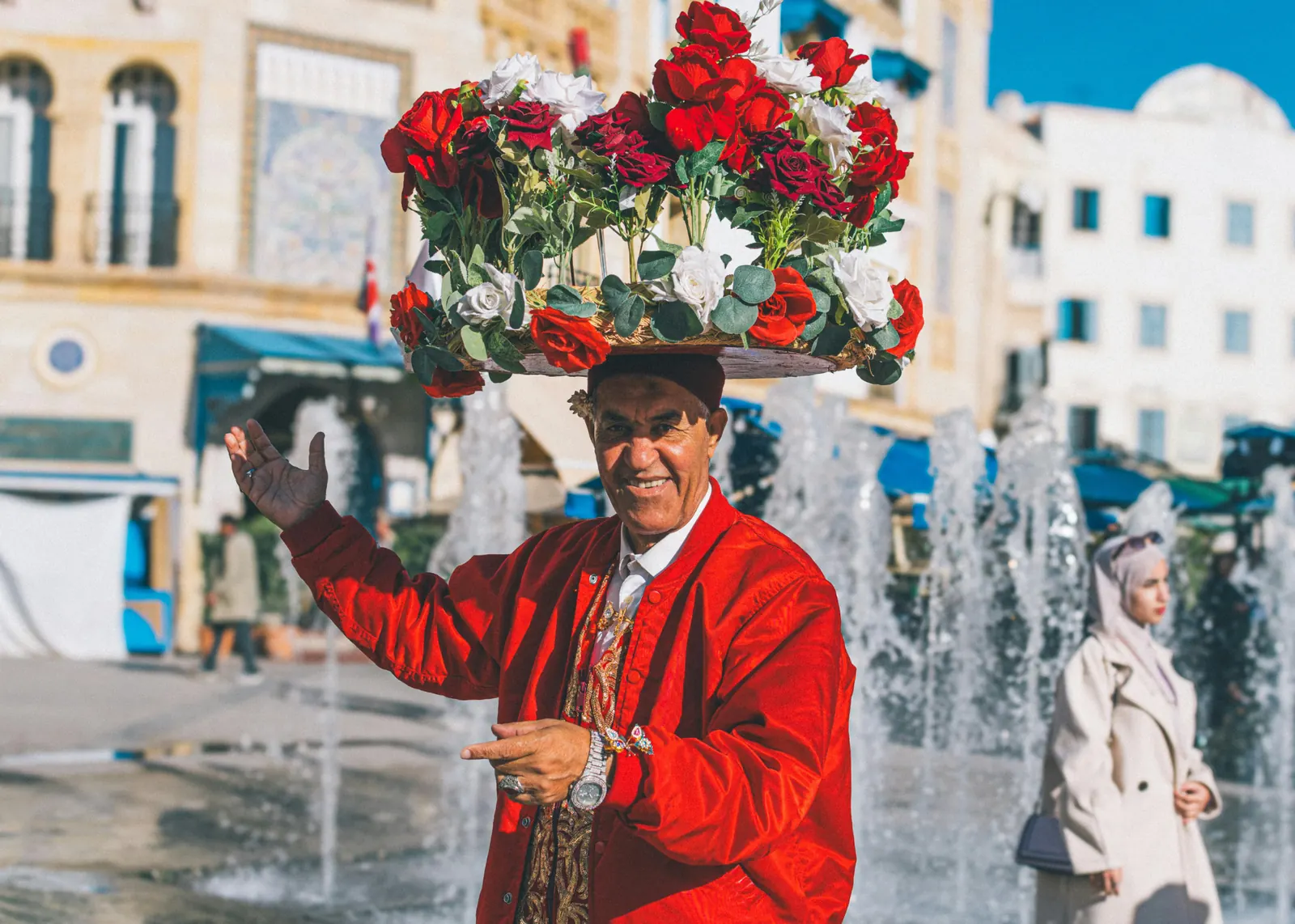
A jasmine garland — the traditional Tunisian welcome

How to order in a Tunisian restaurant

Mezze first — a parade of small cold and hot starters that often makes a meal in itself. Order mechouia, brik, slata tunisia, slata jelbana, ojja and a little plate of olives, and you'll be perfectly happy. Main courses are usually grilled fish, couscous, a tajine or a slow-cooked stew (kamounia, marqa). Bread is automatic. Harissa comes free; ask for 'shwaya' (a little) if you're unsure of the heat. A full lunch with drinks at a good local place is rarely more than 30–45 dinars (around €10–15) per person. Add a 10% tip if service was good.

Ready to plan your Tunisia trip?

Build a custom 3, 7 or 14-day itinerary in 60 seconds with our AI Trip Planner.