Attractions & Shows in Tunisia
Skip-the-line tickets to Tunisia's best attractions and live shows — updated daily with real-time availability.
Tunisia packs an unusual density of world-class attractions into a country roughly the size of England. Three thousand years of Phoenician, Roman, Arab, Ottoman and French history have layered ruins, medinas, museums and monuments across every governorate — and unlike its bigger neighbours, most of them can be visited without a queue.
The ten attractions every first-time visitor should book
If you only have a week, this is the shortlist our editors recommend. Each one is bookable in advance and, in most cases, still open when you arrive without a reservation — but on cruise-ship days (Tuesday and Thursday in La Goulette, Wednesday in Tunis-La Marsa), pre-booked skip-the-line tickets are worth the small premium.
- The Bardo National Museum, Tunis — the largest collection of Roman mosaics on Earth, housed in a 15th-century Hafsid palace. Allow three hours. Closed Mondays.
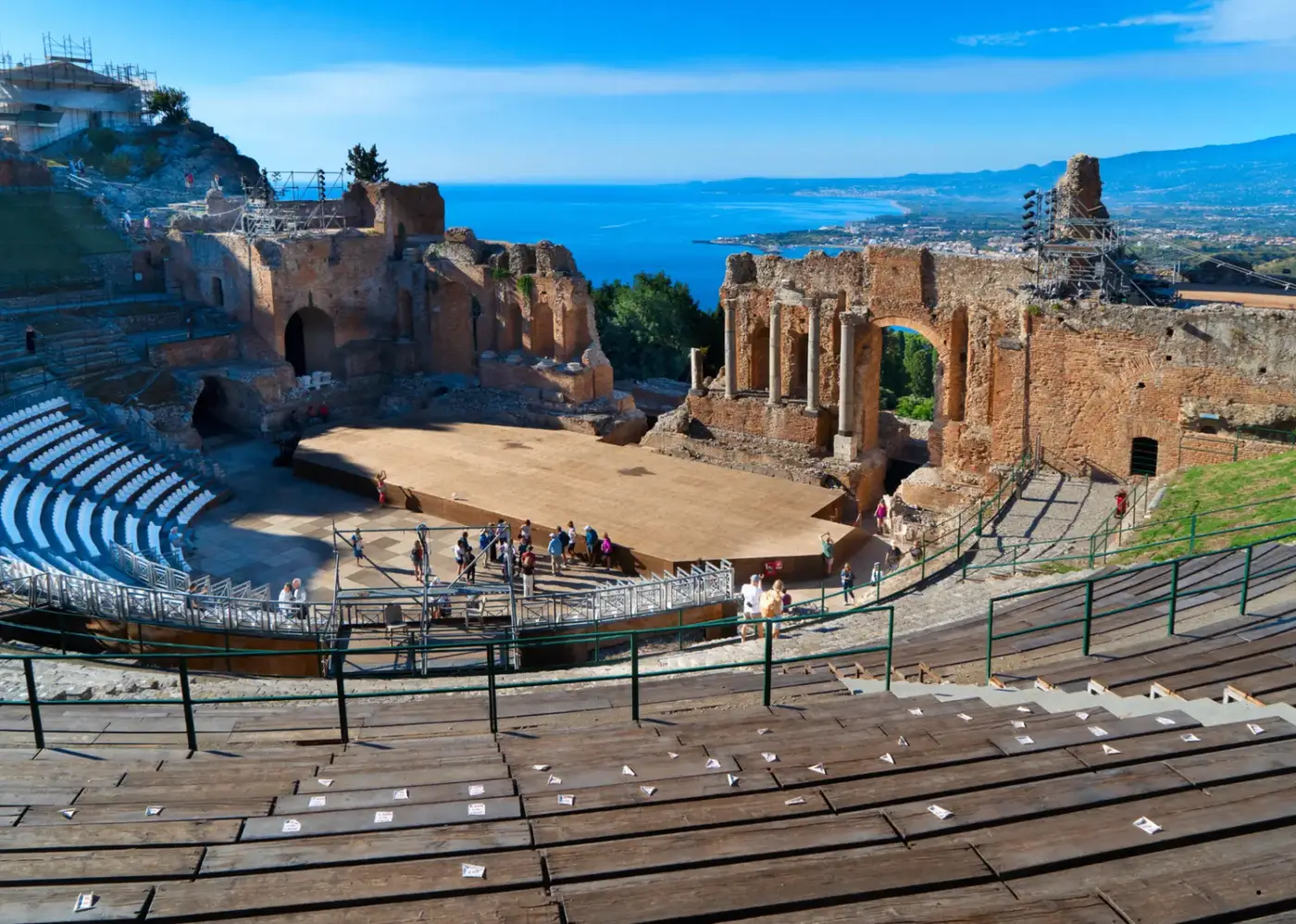
- Carthage archaeological park — the Antonine Baths, Byrsa Hill and the Roman theatre where the Carthage International Festival still runs each July. A single €4 ticket covers all seven sites.
- El Djem amphitheatre — the third-largest Roman colosseum ever built, better preserved than Rome's and almost always empty. Climb to the top tier for the view over the olive groves.
- The Medina of Tunis — UNESCO-listed since 1979, with 700 monuments packed into 270 hectares. Start at Bab el Bhar and follow Rue Jamaa Ez Zitouna to the Great Mosque.
- Sidi Bou Said — the blue-and-white cliff village Paul Klee painted in 1914. Come at 4 pm for the light, stay for a mint tea at Café des Nattes.
- The Sahara at Ksar Ghilane — hot spring, dune sea, camel rides. Reached by 4×4 from Douz in three hours; the last hour is off-road.
- Matmata's troglodyte houses — the underground Berber dwellings that doubled as the Lars homestead in the first Star Wars film. Hotel Sidi Driss still hosts overnight guests in the original set.
- Kairouan's Great Mosque — the fourth-holiest site in Islam and the model for every Maghreb mosque built since 670 CE. Non-Muslim visitors can enter the courtyard.
- Dougga — the best-preserved Roman town in North Africa, spread across a hilltop with wildflowers in spring and almost no crowds year-round.
- Djerba's Ghriba synagogue — one of the oldest continuously used synagogues in the world, with a spring pilgrimage that draws diaspora Jews from three continents.
Live shows, festivals & performances
Tunisia's festival calendar peaks in summer but runs year-round. The Carthage International Festival (July–August) fills the 2,000-year-old Roman theatre with everything from Fairuz retrospectives to symphonic film scores; tickets are 20–80 TND and sell out for the headline nights. The El Djem International Symphonic Music Festival stages classical concerts under the stars inside the amphitheatre — arguably the most atmospheric live music venue in the Mediterranean.
Outside summer, look for the International Festival of the Sahara in Douz (late December), the Testour Malouf Festival celebrating Andalusian music (June), and the weekly Sufi dhikr ceremonies at the Sidi Belhassen zaouia in Tunis — free, respectful visitors welcome. For families, Carthage Land in Yasmine Hammamet and Friguia Park between Sousse and Hammamet run daily; both accept card payment at the gate.
What tickets actually cost
Tunisia is one of the cheapest cultural destinations in the Mediterranean. Museum and site entry is set by the Ministry of Culture at 8–12 TND (€2.50–€4) for foreign visitors, with a small photo permit if you carry a professional camera. Guided tours booked through international platforms typically run €25–€60 per person for a half-day, €70–€120 for a full-day tour including transport. Sahara excursions from Djerba or Tozeur start around €95 per person for a two-day 4×4 circuit including one desert-camp night with dinner.
Payment is straightforward: state-run sites accept cash only (bring small notes), while private tours booked through our partners take card in advance. Save the confirmation email — most guides ask for the QR code at pick-up. Tipping is discretionary; 5–10 TND per traveller for a good tour guide is customary.
Best time to visit each region
Coastal attractions (Carthage, Sidi Bou Said, Sousse medina, El Djem) are comfortable April–June and September–early November. July and August work if you start before 10 am; midday temperatures on exposed Roman sites regularly hit 38 °C. Sahara excursions are best October–April — the classic postcard weather. Kairouan and Dougga sit inland and follow the same cool-season rhythm.
For a full month-by-month breakdown, see our best time to visit Tunisia guide, and pair it with the practical info page for opening hours, dress codes at religious sites, and current entry fees.
Top-rated tickets right now
Prices refresh live. Bookings open in a new tab through our partner.
We may earn a commission on bookings — at no extra cost to you.